


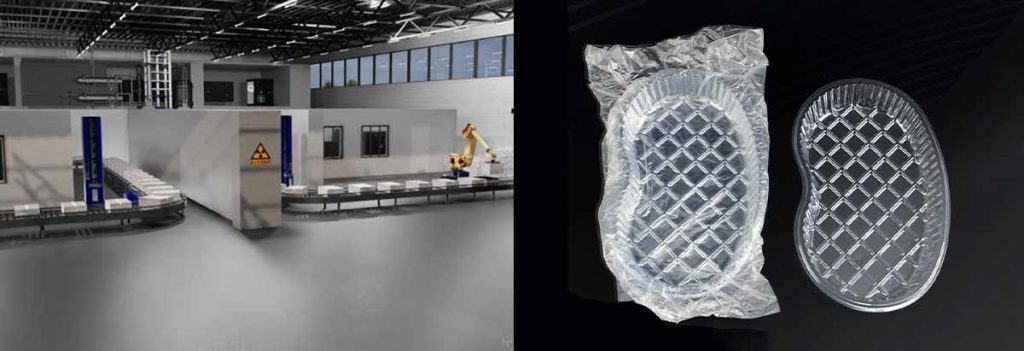
Ionizing radiation changes the properties of materials by breaking and reforming atomic and molecular bonds. When materials absorb energy from sources like electron beams, atoms can shift, and molecules may split or recombine. This process happens deep inside the material, often making it stronger, weaker, or more stable. Medical devices such as syringes and implants rely on electron beam sterilization to remain free from germs. Pharmaceuticals also use this method to keep powders and ointments safe for use.
Key Takeaways
- Ionizing radiation alters materials by breaking and reforming atomic bonds, which can strengthen or weaken them.
- Electron beam sterilization is a fast and effective method for ensuring medical devices and pharmaceuticals are free from harmful microorganisms.
- Different types of ionizing radiation, like gamma rays and electron beams, interact uniquely with materials, affecting their mechanical and chemical properties.
- Understanding how ionizing radiation affects materials can lead to innovations in various fields, including medicine and electronics.
- Environmental factors, such as temperature and humidity, significantly influence how materials respond to ionizing radiation.
Ionizing Radiation Basics
Definition
Ionizing radiation refers to energy in the form of subatomic particles or electromagnetic waves that can remove electrons from atoms or molecules. This process, called ionization, leaves atoms charged and can change their chemical behavior. According to major scientific sources, ionizing radiation includes both particles and waves with enough energy to detach electrons, making it different from non-ionizing forms like visible light or microwaves.
Types
Scientists classify ionizing radiation based on its composition and energy. The main types include alpha, beta, gamma, X-rays, and neutron radiation. Each type interacts with materials in unique ways and requires different protection methods.
| Type of Radiation | Composition | Energy Characteristics | Penetrating Power | Protection Methods |
|---|---|---|---|---|
| Alpha Radiation | Helium nuclei | High ionizing energy | Low | Outerwear, rubber gloves, paper |
| Beta Radiation | Electrons/positrons | Lower ionizing energy | Higher than alpha | Clothing, thin aluminum |
| Gamma Radiation | Photons | Very high energy | Very high | Dense materials like lead or concrete |
| X-rays | Photons | High energy | High | Dense materials |
| Neutron Radiation | Neutrons | Varies | Varies | Polymers, water, specialized shelters |
Electron beams belong to the beta radiation category. They consist of high-speed electrons and play a key role in many industrial and medical applications.
Material Interaction
When ionizing radiation strikes a material, it transfers energy to the atoms inside. This energy can knock electrons out of their orbits, causing ionization. The process may also excite electrons, raising them to higher energy states without removing them. Sometimes, the ejected electrons cause further ionization, leading to a chain reaction within the material. These interactions can break chemical bonds, create new ones, and change the structure of the material. Electron beams, for example, can sterilize medical equipment by disrupting the DNA of bacteria and viruses at the atomic level.
Note: The way ionizing radiation interacts with a material depends on the type of radiation, the energy involved, and the material’s composition.
Mechanisms of Change
Energy Transfer
Ionizing radiation delivers energy to materials through direct collisions and electromagnetic interactions. When high-energy charged particles, such as those from electron beams, strike a material, they transfer energy to atoms and molecules. This process can excite or ionize the atoms, leading to the formation of new chemical species.
- Ionizing radiation creates excited and ionized species in organic polymers and compounds.
- These species can react with emitted electrons, forming additional excited species.
- The evolution of these primary species results in the formation of radicals, which play a crucial role in the chemistry of irradiated materials.
- Energy transfer occurs through mechanisms like excitation, radical migration, ion migration, or charge migration, often becoming trapped at defects in polymers.
Electron beams, delivered by electron beam irradiation equipment, provide higher dose rates than gamma rays. However, their penetration depth is limited, especially in dense materials. Gamma rays can penetrate thicker objects, making them suitable for different applications. The efficiency and depth of energy transfer depend on the type of ionizing radiation and the material’s density.
Bond Breaking
The energy from ionizing radiation can break chemical bonds within materials. In polymers, covalent bonds often break, leading to the formation of free radicals. The process of bond breaking depends on the bond’s strength, known as bond-dissociation energy. For example, breaking an oxygen molecule requires about 119 kcal/mole (5.15 eV per bond). The likelihood of bond fragmentation increases with the charge of the molecule.
| Type of Bond | Description |
|---|---|
| Covalent Bonds | Broken in polymers by ionizing radiation, leading to free radical formation. |
| Crosslinking | Occurs when carbon-centered radicals on different chains combine. |
| Chain Scission | Happens when a radical on the polymer backbone reacts with another radical, breaking the main chain. |
Density functional theory calculations help scientists understand how ionization affects bond dissociation. These calculations show that bond fragmentation is proportional to the molecule’s charge. Accurate modeling of radiation effects often requires first-principles calculations, as current simulation codes may lack detailed parameters.
Free Radical Formation
Free radicals are atoms or molecules with unpaired electrons. Ionizing radiation, including electron beams, generates free radicals in both organic and inorganic materials. These radicals can trigger a range of chemical reactions, including cross-linking and chain scission in polymers.
| Process of Free Radical Formation | Description |
|---|---|
| Generation by Ionizing Radiation | Free radicals form when materials absorb ionizing radiation. |
| Cross-linking and Binding | Radicals enhance cross-linking and covalent binding, affecting DNA and polymers. |
| Indirect Cell Transformation | Radicals can disrupt normal cellular processes, leading to cell transformation. |
| Radical Formation Process | Details |
|---|---|
| Homolytic Bond Cleavage | Involves breaking covalent bonds, such as splitting H2 into two hydrogen radicals. |
| Energy Considerations | Stability of radicals depends on the energy required for their formation. |
| Spin-forbidden Reactions | Some radical formations are spin-forbidden, adding complexity to the process. |
The concentration of free radicals in polymers increases with the absorbed dose of electron beams. At low irradiation temperatures, radical yield rises with dose. At higher temperatures, the yield becomes even greater but eventually saturates. For example, the convergence point for radical concentration in polymers can reach about 1.5 × 10^18 spins per gram.
Structural Modification
Ionizing radiation causes structural modifications at both microscopic and nanoscopic levels. The process of ionization influences the mobility of defects and constrains the movement of ions within the material. Short-range irradiation-induced diffusion can promote the formation of nanocrystalline structures, such as Al2O3. However, some materials, like amorphous SiOx, resist crystallization due to the nature of their chemical bonds.
Ionization under irradiation affects defect mobility and mass-flow paths. Short-range diffusion can create nanocrystalline structures, while long-range ionization influences mass-flow patterns during pore closure. In highly ionized crystals, correlated charged ions create barriers to atomic diffusion, increasing resistance to radiation effects. High ion-beam fluxes reduce defect mobility, causing slower mass-flow and morphological changes. The interplay between bond breaking and atomic diffusion shapes material reconstruction at the microscopic scale.
Scientists use advanced imaging and spectroscopic techniques to observe these structural changes:
| Technique | Description |
|---|---|
| Infrared Spectroscopic Imaging | Observes structural changes in materials after irradiation. |
| Raman Spectroscopy | Analyzes molecular vibrations, providing spatial mapping of materials. |
| X-ray Fluorescence (XRF) | Detects element-specific fluorescence for elemental analysis and mapping. |
| Inductively Coupled Plasma Mass Spectrometry (ICP-MS) | Measures trace elements and isotopes with high sensitivity. |
| Laser-Induced Breakdown Spectroscopy (LIBS) | Analyzes surface composition by generating plasma and collecting emitted light spectra. |
These techniques help researchers visualize and understand the complex radiation-induced changes that occur in materials exposed to electron beams and other forms of ionizing radiation.
Influencing Factors
Radiation Type
Different types of ionizing radiation produce unique changes in materials. Gamma rays, electron beams, and X-rays each interact with matter in distinct ways. For example, gamma radiation causes a greater decrease in the mechanical strength of polypropylene than electron beams. X-rays show similar effects to gamma rays on mechanical properties. However, all three types have little impact on the thermal properties of polypropylene at standard industrial doses.
| Type of Radiation | Effect on Mechanical Properties | Effect on Thermal Properties |
|---|---|---|
| Gamma Radiation | Greater impact on polypropylene (decrease in load, elongation at break) | Similar effects on thermal properties compared to X-ray and e-beam |
| Electron Beam | Lesser impact on polypropylene compared to gamma | No significant change in thermal properties up to 100 kGy |
| X-Ray | Similar effects to gamma on mechanical properties | No significant change in thermal properties up to 60 kGy |
Dose
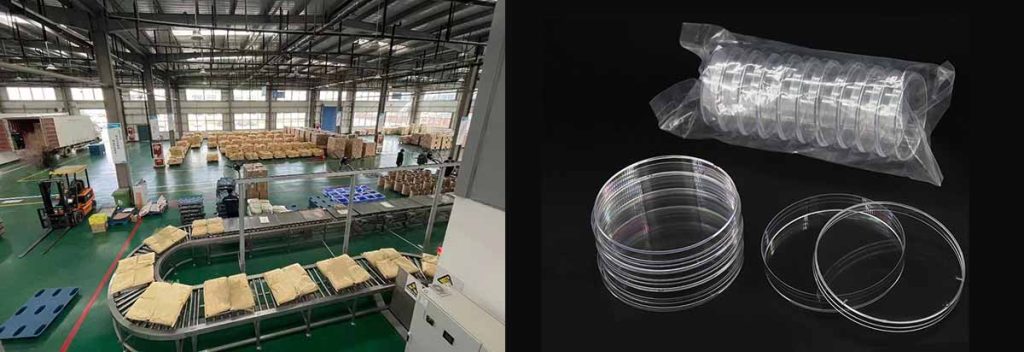
The amount of radiation, or dose, determines the extent of radiation effects on materials. Industrial applications use specific dose ranges to achieve desired changes. For instance, higher doses often lead to more pronounced changes in mechanical or chemical properties. The table below shows typical dose ranges used in industry.
| Dose Range (mSv) | Group |
|---|---|
| 0.101 – 1.417 | Group 1 |
| 1.417 – 2.585 | Group 2 |
| 2.585 – 2.903 | Group 3 |
| 2.903 – 4.908 | Group 4 |
Materials exposed to higher doses may experience increased ionization, which can result in more significant structural or chemical changes.
Material Composition
The chemical makeup of a material influences its response to high-energy charged particles. Some materials, such as actinide compounds, show high tolerance to radiation due to their stable structures. Others, like ThO2, have low tolerance because they cannot change their valence state. The table below compares several materials and their radiation tolerance.
| Material | Redox Behavior | Radiation Tolerance |
|---|---|---|
| Actinide Materials | Multivalent cations | High tolerance due to structural stability |
| ThO2 | Non-redox active | Low tolerance, no valence state changes |
| CeO2 | Reducible, multiple oxidation states | Moderate tolerance, affected by grain size |
| UO3 | Hexavalent uranium | High phase modification due to multiple oxidation states |
Environment
Environmental conditions, such as temperature and humidity, play a key role in how materials respond to ionizing radiation.
- Increased humidity and temperature can raise indoor radon levels, which affects radiation exposure.
- High humidity disrupts the balance of radon gas, leading to health risks.
- Temperature changes can alter the optical and electronic properties of materials like pentacene when exposed to radiation.
- Scientists use ionizing radiation as a controlled method to modify organic semiconductors, but the results depend on the surrounding environment.
Note: Understanding environmental factors helps researchers predict and control the effects of radiation on different materials.
Property Changes
Mechanical
Ionizing radiation can change the mechanical properties of materials in many ways. When polymers like linear low-density polyethylene (LLDPE) and ethylene-butene copolymer (EBC) absorb energy from electron beams, their tensile strength increases. This improvement happens because crosslinking forms between polymer chains, making the material tougher. The following table shows how mechanical properties change after exposure to high doses:
| Property | Value at 150 kGy | Notes |
|---|---|---|
| Tensile Strength (LLDPE) | 17.3 MPa | Increases with radiation dose due to crosslinking. |
| Tensile Strength (EBC) | 12.3 MPa | Increases with radiation dose due to crosslinking. |
| Gel Content | Slight increase | Does not change significantly beyond 150 kGy. |
| Crystalline Domains | Broken at high doses | Crosslinking increases but to a lesser extent. |
Other polymers, such as PEEK films, also show higher tensile strength, Young’s modulus, and peak strain after electron beam exposure. Permanent elongation decreases, which means the material performs better under stress.
| Property | Change with Radiation Dose | Notes |
|---|---|---|
| Tensile Strength | Increases | High radiation resistance observed in PEEK films. |
| Young’s Modulus | Increases | Improvement due to radiation-induced crosslinking. |
| Peak Strain | Increases | Improvement due to radiation-induced crosslinking. |
| Permanent Elongation | Decreases | Indicates enhanced material performance under stress. |
Metals and ceramics can also suffer damage from ionizing radiation. The percentage decrease in tensile strength often depends on the grain boundary structure. For example:
- The tensile strength of irradiated silicon carbide (SiC) drops more in bicrystals than in single crystals.
- Materials with low-angle grain boundaries resist damage better than those with high Σ values.
- Σ3 grain boundaries show greater loss in tensile strength after irradiation.
These changes show that electron beams can both strengthen and weaken materials, depending on their structure and composition.
Chemical
Ionizing radiation causes chemical changes by breaking molecular bonds and creating free radicals. This process starts almost instantly after exposure. In the physical stage, electrons are knocked out of molecules, creating positive ions. The energy from electron beams often exceeds the ionization potential of organic molecules.
- Within fractions of a second, free radicals form as electrons recombine with positive ions.
- These free radicals can trigger chain reactions, leading to crosslinking, polymerization, or chain scission.
- The molecular structure of organic materials changes, which can alter their properties.
For example, crosslinking makes polymers more durable, while chain scission can cause damage and reduce strength. The chemical structure of the material determines whether crosslinking or degradation dominates. Aromatic rings in polystyrene provide stability, while polypropylene is more likely to degrade.
Note: Free radical chain reactions play a key role in changing the chemical structure of both organic and inorganic materials after exposure to electron beams.
Electrical
Ionizing radiation affects the electrical properties of semiconductors and insulators. When electron beams strike materials like Au/SiO2/n-Si (MOS) structures, the electrical conductivity decreases as the radiation dose increases. This reduction in conductivity shows that radiation damage can disrupt the flow of electrons, making the material less effective for electrical applications.
- The decrease in electrical conductivity results from defects and traps created by ionization.
- These changes can impact the performance of electronic devices, especially those used in high-radiation environments.
Dielectric properties also change after irradiation. The table below summarizes some of these effects:
| Change Type | Description |
|---|---|
| Photobleaching | Reduction in the joint density of states (JDOS) at the original transition energy, resulting in a negative change in the imaginary part of the dielectric function. |
| Photo-induced Absorption | New transitions increase JDOS, leading to a positive change in the dielectric function. |
| Transient Carrier Dynamics | Changes in the dielectric function reveal information about carrier dynamics and transition probabilities. |
These changes can affect how materials store and transfer electrical energy.
Thermal
Ionizing radiation can change the thermal stability and heat resistance of polymers and composites. Polymers with strong covalent bonds, such as polyethylene, often become more heat-resistant after electron beam irradiation. Crosslinking increases thermal resistance, making the material more stable at high temperatures. In contrast, polymers like polypropylene may degrade due to chain scission, which lowers their thermal stability. The chemical structure of the polymer determines how it responds to radiation damage.
Electron beams can also change the thermal conductivity of metals. For example:
- The thermal conductivity of titanium Ti-6Al-4V powder increases with more local beam passes.
- Thermal diffusivity more than doubles at both low and high temperatures.
- The relative density changes only slightly, so the increase in thermal conductivity comes mainly from changes in the material’s structure.
These results show that electron beams can improve or reduce thermal properties, depending on the material and the type of damage.
Sterilization Applications
Electron beam irradiation equipment plays a vital role in sterilizing medical devices and packaging materials. Electron beams can destroy or remove microorganisms that pose health risks. This method works quickly, often taking only seconds, compared to gamma irradiation, which can take hours.
- Electron beam sterilization is a good alternative to methods like ethylene oxide, especially for materials that cannot withstand heat.
- The choice of sterilization method depends on the material and the level of damage it can tolerate.
| Sterilization Method | Typical Dose Rate |
|---|---|
| Electron Beam (EB) | ~10^4 kGy/h |
| Gamma Irradiation | Lower by three or more orders of magnitude |
Electron beam irradiation equipment allows manufacturers to tailor sterilization processes for specific products, ensuring safety without causing unnecessary damage. This technology supports the production of sterile medical devices, pharmaceuticals, and food packaging, making it essential in many industries.
Conclusion
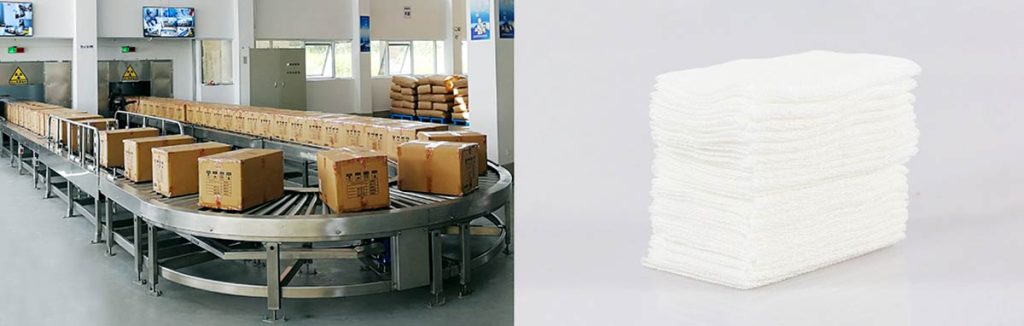
Ionizing radiation, especially electron beams, changes materials by altering atomic and molecular bonds. This knowledge helps industries improve products and ensure safety in applications like sterilization. Scientists use these insights to develop new materials with better performance and stability.
“Understanding ionizing radiation effects can lead to innovations in nanophotonics and metasurfaces, enhancing material stability and performance under radiation.”
| Application Type | Description |
|---|---|
| Fatigue Strength Enhancement | Increases durability by refining surface characteristics. |
| Coating Applications | Provides protection and aesthetic appeal. |
| Corrosion Protection | Shields metals from environmental factors. |
| Non-Destructive Testing (NDT) | Ensures integrity without damaging objects. |
| Electron Beam Curing | Enables rapid curing and improved properties. |
| Micro-Machining | Creates intricate designs for high-precision industries. |
Future research will likely expand these uses, leading to safer, more advanced materials for medicine, electronics, and beyond.
FAQ
What Is the Difference Between Electron Beam and Gamma Irradiation?
Electron beam uses high-speed electrons to treat materials. Gamma irradiation uses photons from radioactive sources. Both methods change material properties, but electron beam offers faster processing and less penetration. Gamma irradiation penetrates deeper, making it suitable for thicker objects.
How Does Irradiation Affect the Safety of Medical Devices?
Irradiation sterilizes medical devices by destroying bacteria and viruses. The process does not leave harmful residues. Manufacturers use electron beam and gamma irradiation to ensure devices remain safe for patients. Regulatory agencies approve these methods for medical use.
Can Irradiation Change the Color or Appearance of Materials?
Irradiation can cause color changes in some plastics and polymers. The effect depends on the type of beam, dose, and material composition. Most changes are minor and do not affect performance. Manufacturers test materials to ensure appearance remains acceptable after irradiation.
Why Do Industries Prefer Electron Beam for Some Applications?
Industries choose electron beam for its speed and efficiency. The process delivers high doses quickly, making it ideal for sterilizing packaging and medical products. Electron beam irradiation also allows precise control, reducing the risk of overexposure.
Is Irradiation Safe for Food Packaging?
Irradiation keeps food packaging free from germs. Electron beam and gamma irradiation do not make packaging radioactive. Regulatory bodies monitor and approve these processes. Consumers can safely use irradiated packaging for food storage.