


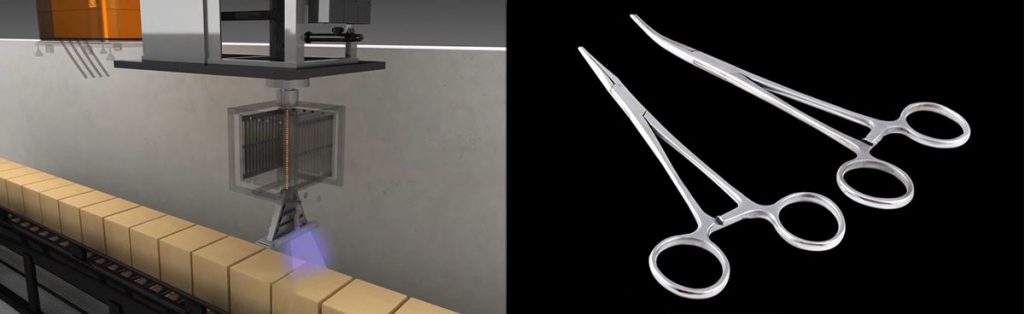
Reshoring and localized manufacturing have transformed how companies approach production. Manufacturers now prioritize supply chain resilience and regulatory compliance by investing in in-house electron beam irradiation equipment.
- In 2024, US manufacturers announced 244,000 reshoring jobs, and since 2010, over 2.5 million jobs have shifted through foreign direct investment.
- New tariffs and compliance costs make overseas production less attractive.
- Many global firms now use a ‘local-for-local’ strategy.
| Factor | Description |
|---|---|
| Control over Sterilization | Large companies ensure regulatory standards by using in-house solutions. |
| Customization and Turnaround | In-house equipment enables faster production schedules and greater customization. |
| Technological Advancements | Improvements make electron beam technology more accessible and cost-effective. |
Manufacturers benefit from greater efficiency, improved quality, and faster speed-to-market.
Key Takeaways
- Reshoring boosts local manufacturing, creating over 244,000 jobs in 2024. Companies should consider local production to enhance supply chain resilience.
- In-house E-Beam facilities improve quality control and compliance. Manufacturers gain better control over sterilization processes, reducing contamination risks.
- Investing in e-beam technology enhances efficiency and lowers costs. Companies can speed up production cycles and respond quickly to market demands.
- A skilled workforce is crucial for operating e-beam facilities. Companies must invest in training to ensure smooth operations and support growth.
- Embracing e-beam technology aligns with sustainability goals. The process generates less waste and energy use, making it an eco-friendly choice for manufacturers.
Reshoring and Localized Manufacturing
Manufacturing Strategy Shift
Reshoring and localized manufacturing have become central themes in today’s industrial landscape. Companies now move production closer to home to reduce risks and improve control. Reshoring refers to the process of bringing manufacturing operations back to the country of origin. Localized manufacturing focuses on producing goods near the end consumer, often within the same region or country. This shift supports consumer-driven localization, where businesses respond directly to local market needs.
Manufacturers typically follow a structured approach to implement reshoring:
- Strategic Assessment and Vision Setting
Companies evaluate their current supply chain, identify critical products for reshoring, and conduct a Total Cost of Ownership analysis. - Build the Right Team and Partnerships
Organizations assemble dedicated teams and collaborate with local educational institutions and technology partners to develop the workforce. - Technology Planning and Pilot Projects
Businesses focus on continuous improvement and integrate digital tools to optimize operations. - Evaluate, Iterate, and Expand
Teams conduct post-mortem evaluations to learn from the reshoring process and apply insights to future initiatives.
This methodical strategy ensures that reshoring and localized manufacturing efforts align with long-term business goals and market demands.
Supply Chain Impact
The impact of reshoring on the supply chain is significant. Companies seek to strengthen supply chain resilience by reducing dependence on global imports and minimizing disruptions. The growth of the North America E Beam High Voltage Market demonstrates how reshoring drives demand for advanced technologies like electron beam sterilization. Technological innovation and application diversity fuel this market, while regulatory emphasis on product safety and quality—especially in healthcare and food packaging—further accelerates adoption.
Companies now prioritize eco-friendly sterilization methods, which aligns with reshoring and localized manufacturing trends.
Government policies and economic incentives play a crucial role in this transformation. Tax breaks and grants encourage businesses to invest in domestic production. The U.S. government’s CHIPS Act and Inflation Reduction Act serve as prime examples, driving the relocation of critical industries and reducing global supply chain risks. These measures help companies meet regulatory compliance requirements and respond to sustainability demands.
Manufacturers who embrace reshoring and localized manufacturing gain greater control over their supply chain, improve product quality, and respond faster to market changes. As reshoring continues to shape the future of manufacturing, the demand for in-house e-beam facilities will only increase.
Demand Drivers for In-house E-Beam Facilities
Quality and Compliance
Manufacturers invest in electron beam irradiation equipment to meet strict quality and compliance standards. Regulatory agencies demand high levels of product safety, especially in industries like healthcare and food packaging. In-house e-beam facilities allow companies to control the sterilization process and ensure every product meets local and international regulations. This control reduces the risk of contamination and recalls, which can damage a brand’s reputation.
Recent research and development efforts have improved the precision and scalability of e-beam technology. These advancements help manufacturers achieve better results and expand the range of products they can process. Key innovations include:
- High-speed multi-beam systems that increase throughput and resolution.
- New resist materials that enhance precision in electron beam applications.
- The ability to pattern on nonplanar or irregular surfaces, which supports flexible electronics and biomedical devices.
These improvements make electron beam irradiation equipment more attractive for companies focused on reshoring and localized manufacturing. By bringing production closer to home, manufacturers gain greater control over quality and compliance, which strengthens supply chain resilience.
However, transitioning to in-house e-beam facilities presents several challenges. The table below outlines common issues manufacturers face during this process:
| Challenge Type | Description |
|---|---|
| Beam conversion is extremely unlikely | Devices relying on PTFE surface coatings face significant challenges. |
| Beam conversion is possible, but requires extensive work | Reengineering and validation costs are comparable to initial development. |
| Beam conversion is possible with minor modifications | Small changes needed in non-critical areas, requiring some engineering work. |
| Beam conversion is possible with minimal testing | Changes to certain devices may not require a new 510(k) submission. |
Manufacturers must evaluate these challenges before investing in new equipment. Careful planning ensures a smooth transition and helps companies maintain compliance throughout the production process.
Cost and Efficiency
Cost and efficiency drive many companies to adopt in-house electron beam irradiation equipment. Outsourcing sterilization or material processing often leads to delays, higher transportation costs, and less flexibility. By moving these processes in-house, manufacturers reduce expenses and speed up production cycles.
In-house e-beam facilities support reshoring by enabling faster response to market changes. Companies can adjust production schedules quickly and customize products for local markets. This flexibility gives businesses a competitive edge, especially when supply chain disruptions threaten global operations.
Production efficiency improves with advanced e-beam systems. High-speed multi-beam technology increases throughput, allowing companies to process more products in less time. New resist materials and the ability to work with complex surfaces further expand the range of applications. These features help manufacturers meet growing demand without sacrificing quality.
Operational benefits also include better inventory management and reduced waste. Companies can produce goods as needed, which lowers storage costs and minimizes excess inventory. This approach aligns with modern manufacturing strategies that focus on lean production and sustainability.
Tip: Investing in e-beam technology not only improves efficiency but also supports long-term growth by enabling rapid adaptation to new market requirements.
As reshoring and localized manufacturing continue to shape the industry, the demand for efficient, high-quality production methods will rise. Electron beam irradiation equipment provides the tools manufacturers need to stay competitive and compliant in a changing global landscape.
Industry Impact
Medical Devices

The medical device sector leads the adoption of in-house electron beam facilities. Companies in this industry face strict regulatory standards and require reliable sterilization methods. E-beam technology supports high-volume production and ensures product safety. The market for e-beam sterilization in medical devices continues to grow. In 2024, the market size reached $2.5 billion. By 2033, projections estimate it will reach $4.2 billion, with a compound annual growth rate (CAGR) of 6.5%. Another report shows the market could grow from $1.23 billion in 2023 to $2.14 billion by 2030, with a CAGR of 11.8%.
| Year | Market Size (USD) | CAGR (%) |
|---|---|---|
| 2024 | 2.5 Billion | N/A |
| 2033 | 4.2 Billion | 6.5 |
| 2023 | 1.23 Billion | N/A |
| 2030 | 2.14 Billion | 11.8 |
Hospitals and device manufacturers benefit from faster turnaround and improved quality control. These advantages help companies respond quickly to changes in demand and maintain a resilient supply chain.
Semiconductors
Semiconductor manufacturing relies on electron beam technology for specialized coatings and advanced processing. E-beam machining enables precise milling, cutting, welding, and heating of materials. Manufacturers use this technology for vacuum deposition and purification. E-Beam systems also support inspection and analysis of materials, which improves product quality and consistency. These capabilities help companies reduce supply chain risks and protect intellectual property. As new manufacturing plants open in North America, e-beam technology plays a key role in supporting local production.
- Electron beam machining for milling, cutting, welding, and heating
- Vacuum deposition and purification processes
- Inspection and analysis of materials
Automotive
Automotive manufacturers use E-Beam technology to enhance the properties of critical components. This process improves the durability and performance of battery parts, gears, and polymers. E-beam processing allows precise control over material properties, which results in high-quality components. These improvements extend the lifespan and safety of vehicles. The automotive industry has experienced significant reshoring due to rising offshore labor costs and the need for agile production. Companies gain better control over their supply chain and can quickly adapt to market changes.
| Industry | Reasons for Reshoring |
|---|---|
| Automotive | Rising offshore labor costs, quality-control concerns, need for agile production |
| Electronics | Reduce supply-chain risks, protect intellectual property, enhance innovation |
| Machinery | Rising offshore labor costs, quality-control concerns, need for agile production |
Benefits of In-house E-Beam
Efficiency
Electron beam irradiation equipment delivers significant gains in production efficiency and quality control. Companies that adopt e-beam systems benefit from lower operating costs, rapid processing, and energy efficiency. The technology eliminates the need for chemicals, reducing both procurement and disposal expenses. E-beam systems also require less physical space and offer simpler regulatory compliance, which lowers infrastructure costs. The table below highlights key efficiency benefits:
| Benefit | Description |
|---|---|
| Lower Operating Costs | E-beam eliminates chemical usage, reducing procurement and disposal costs. |
| Energy Efficiency | E-beam systems are more energy-efficient compared to X-ray systems. |
| Rapid Processing | E-beam sterilization is fast, enabling higher throughput and lowering per-unit costs. |
| No Isotope-Related Costs | E-beam avoids high costs associated with gamma sterilization’s radioactive materials. |
| Lower Infrastructure Costs | E-beam requires less physical space and simpler regulatory compliance, reducing overall expenses. |
| Accelerated Turnaround Time | E-beam products are ready for use immediately, improving inventory management. |
| Scalability | E-beam systems can be modular and scalable, allowing for capacity adjustments without high costs. |
| Stable Costs | E-Beam’s inputs remain favorable, avoiding litigation and isotope supply risks. |
E-Beam wafer inspection systems use focused electron beams to scan semiconductor wafers. These systems detect defects as small as a few nanometers, which is crucial for advanced chip manufacturing. This precision ensures high-quality output and reduces the risk of component failure.
Speed-to-Market
In-house E-Beam facilities help companies accelerate speed-to-market for new products. The technology enables rapid transfer of pre-sterilized materials into aseptic areas, supporting high-speed decontamination processes. This capability proves especially valuable for heat-sensitive materials, as it improves throughput and minimizes delays in product availability. Manufacturers can respond quickly to market demands and reduce inventory holding times. By controlling sterilization and processing internally, companies streamline their production cycles and deliver products to customers faster.
Tip: Faster turnaround times and improved inventory management give manufacturers a competitive edge in dynamic markets.
Flexibility
E-beam technology brings greater flexibility and customization to manufacturing environments. Engineers can prototype circuits and sensors, making quick design changes without waiting for new masks. This adaptability supports research and development, low-volume production, and rapid pilot runs. Manufacturers can pivot quickly to meet changing customer needs or market trends.
| Feature | Benefit |
|---|---|
| Precise process controls | Enhances manufacturing quality |
| Flexible scheduling | Aligns with production needs |
| Reduced risk of over/under-processing | Minimizes scrap rates and waste |
E-Beam lithography allows for rapid design changes and quick iterations, which are essential for maintaining a competitive advantage. Companies can support pilot runs and low-volume production with minimal downtime, ensuring they stay agile in a fast-paced industry.
Opportunities for Manufacturers
Investment Considerations
Manufacturers evaluating electron beam technology must approach investment decisions with a strategic mindset. The process involves more than just purchasing equipment. Companies must assess regulatory compliance, environmental impact, and market positioning. The following table outlines key investment considerations:
| Key Consideration | Description |
|---|---|
| Regulatory Compliance | Manufacturers must align with evolving regulations from agencies like the French Ministry of Environment and the European Chemicals Agency, focusing on safety standards and emission controls. |
| Environmental and Health Considerations | Authorities emphasize managing radiation exposure, waste by-products, and ecological footprints, necessitating investments in safety features and waste management solutions. |
| Market Dynamics | Proactive development of compliant E-Beam systems can position manufacturers as industry leaders, leveraging government incentives and fostering trust with regulators and end-users. |
Investment in e-beam infrastructure supports manufacturing resilience and helps companies avoid supply chain disruptions. Companies that invest early can secure a competitive advantage and expand production capabilities. A robust infrastructure also attracts new jobs and supports long-term growth.
Workforce Needs
A skilled workforce is essential for successful e-beam facility operation. Workforce development starts with targeted job training for all skill levels, beginning on day one and continuing throughout each employee’s career. Key responsibilities for operators include:
- Operating irradiation equipment control panels according to standard operating procedures and work orders.
- Maintaining accurate records in the BPCS system and ensuring proper irradiation of wire and cable.
- Performing minor repairs and keeping equipment clean.
Qualifications for these jobs typically include a high school diploma or GED, one to three months of transferrable experience, and the ability to work in a fast-paced environment. Employees must demonstrate basic arithmetic skills and use measuring instruments. Companies that invest in workforce development build a pipeline of skilled workforce, ensuring smooth operations and supporting infrastructure expansion.
Future Outlook
The future of e-beam technology in manufacturing looks promising. Integration with additive manufacturing processes enables near-net-shape fabrication and precision finishing in a single setup. Sustainability remains a top priority, as e-beam’s low waste generation and efficient energy use align with corporate decarbonization goals. Smart factories now incorporate e-beam systems with real-time monitoring and machine learning for dynamic adjustments. These trends will drive further investment, create new jobs, and strengthen infrastructure. Manufacturers who embrace these innovations will enhance production capabilities and build resilience for the future.
Conclusion
Reshoring and localized manufacturing trends continue to boost demand for in-house e-beam facilities. Manufacturers gain efficiency, quality control, and faster speed-to-market.
- Companies should assess regulatory needs, workforce readiness, and ROI before investing in e-beam technology.
- In-house E-Beam systems offer a path to greater resilience and innovation.
Industry experts expect e-beam adoption to accelerate as manufacturers seek smarter, more sustainable production solutions.
FAQ
What Is Electron Beam (E-Beam) Sterilization?
Electron beam sterilization uses high-energy electrons to destroy bacteria, viruses, and other pathogens. This process ensures products meet safety standards. Manufacturers prefer e-beam because it works quickly and does not leave chemical residues.
Why Do Manufacturers Choose In-house E-Beam Facilities?
Manufacturers select in-house e-beam facilities for greater control over quality, compliance, and production schedules. These facilities reduce transportation costs and speed up delivery. Companies also protect intellectual property by keeping sensitive processes on-site.
How Does E-Beam Technology Support Reshoring?
E-beam technology enables local production by providing fast, reliable sterilization and material processing. Companies can respond to market changes quickly. This flexibility supports reshoring strategies and strengthens supply chain resilience.
What Industries Benefit Most from E-Beam Facilities?
Medical devices, semiconductors, and automotive industries gain the most from e-beam facilities.
These sectors require strict quality control, fast turnaround, and advanced material processing.
Is E-Beam Sterilization Environmentally Friendly?
E-beam sterilization does not use chemicals or radioactive materials. The process generates minimal waste and consumes less energy than traditional methods. Companies meet sustainability goals and reduce environmental impact with e-beam technology.