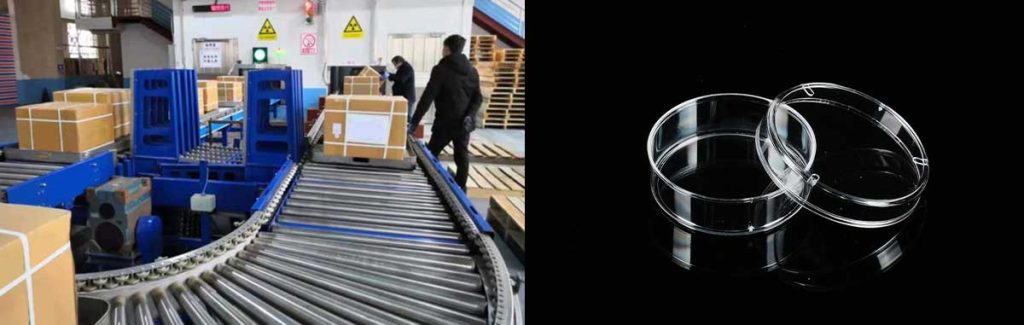
Products treated with e-beam can be used immediately after sterilization. There is no waiting period due to the absence of residual radiation.
E-beam technology is environmentally friendly. It reduces chemical use and energy consumption compared to other sterilization methods.
Does E-Beam Make My Products Radioactive?
E-Beam Irradiation Explained
E-beam irradiation uses high-energy electrons to sterilize and decontaminate products. Electron beam irradiation equipment generates these electrons using industrial accelerators. Operators can switch the equipment on and off, which allows precise control over the process. Unlike radiation sterilization that relies on radioactive materials, e-beam irradiation does not use radioisotopes. The electrons penetrate the product, disrupting microorganisms at the molecular level. This process does not affect the atomic nucleus, so it cannot make the product radioactive.
E-beam technology stands out for its clean operation and environmental friendliness. It reduces the need for chemical treatments and generally consumes less energy than other irradiation methods.
Many people ask, “Does e-beam make my products radioactive?” The answer remains no. E-beam irradiation operates below the energy threshold required to induce radioactivity. Commercial e-beam sterilization uses energy levels below 11 MeV, which is far less than what is needed to alter the atomic nucleus. High-energy electrons interact with the product at the molecular level, causing radiolysis of water and the formation of free radicals, but they do not create residual radioactivity.
International guidelines, including those from the IAEA and the European Union, require verification that e-beam treated products do not become radioactive. These standards ensure that e-beam safety remains a top priority in every application.
Product Safety After E-Beam
E-beam sterilization allows products to leave the facility immediately after treatment. The process does not produce residual radiation, so there is no waiting period. E-beam safety features include self-shielded containment, engineered openings that attenuate x-rays, and dual redundant safety interlocks on electron beam irradiation equipment. These features protect workers and prevent accidental exposure.
Regulatory standards limit energy to 10 MeV to minimize risks such as neutron generation and delayed radioactivity.
Industry guidelines recommend transferring sterilized products to a controlled environment and keeping packaging sealed to maintain sterility.
Labeling and documentation help ensure traceability and continued product safety.
Note: Some cases of irritation among postal workers handling irradiated mail have been reported, but these symptoms were linked to carbon monoxide from irradiated plastic, not to residual radioactivity.
E-beam irradiation provides a reliable method for radiation sterilization without making products radioactive. High-energy electrons deliver effective sterilization, and e-beam technology continues to advance with improved dosimetry and eco-friendly innovations. Products treated with e-beam irradiation remain safe for consumers, workers, and the environment.
Misconceptions about the safety of irradiated foods
Concerns about pesticides and hormones in food
Preference for natural and minimally processed foods
Environmental concerns and fears of technology
Scientific research shows that e-beam irradiation can improve the safety of meat by reducing harmful microbes. Studies found that doses of 3, 6, and 9 kGy lowered microbial counts, with complete inactivation at 9 kGy. Although higher doses may slightly reduce amino acid content, the nutritional and sensory qualities remain acceptable when the process is optimized. The safety of irradiated food continues to meet international standards, supporting its use in food safety applications.
Safety evaluations, adherence to good manufacturing practices, specific dose limits for various food products
USDA
Compliance with the Federal Meat Inspection Act and Poultry Products Inspection Act, adherence to irradiation safety standards
International standards also define maximum allowable doses for food irradiation.
Purpose
Dose (kGy)
Food Type
Inhibit sprouting
0.05
White potatoes
Sterilization
30
Herbs and spices
Upper limit for sterility
10
General food processing
The Joint FAO/IAEA/WHO Study Group concluded that food irradiated at any dose needed for technological objectives is safe and maintains nutritional adequacy.
Material Compatibility
E-beam irradiation works well with many materials, making it suitable for a wide range of food safety applications. E-beam is gentler on products than gamma irradiation, delivering doses quickly and minimizing damage to plastics, polymers, and coatings. This compatibility supports product safety and helps maintain the integrity of packaging. However, irradiation can cause changes in packaging materials, especially in the presence of oxygen. These changes may affect barrier properties and lead to the formation of radiolytic products that could migrate into food. Manufacturers must select packaging materials carefully and optimize irradiation conditions to ensure product safety.
Tip: Manufacturers should validate packaging materials for e-beam sterilization to maintain food safety and product quality.
Conclusion
E-beam irradiation keeps every product non-radioactive and safe. Leading organizations highlight e-beam sterilization for its efficiency and lack of chemical residues.
E-beam supports both safety and sustainability. For more details, experts can help answer specific questions.
FAQ
Does E-Beam Irradiation Leave Any Residual Radiation?
No residual radiation remains after irradiation. Products treated with e-beam can leave the facility immediately. Safety checks confirm no radioactive contamination.
Tip: Always check product labels for irradiation information.
Can Irradiation Change the Taste or Texture of Food?
Irradiation may slightly affect taste or texture at high doses. Most foods retain their original qualities when processed with approved e-beam methods.
Is E-Beam Irradiation Safefor Packaging Materials?
Manufacturers select packaging materials that withstand irradiation. E-beam treatment does not make packaging radioactive. Safety standards protect both products and consumers.
If interested in our EBM machine, Ebeam services, Ebeam products, or Additive manufacturing, please fill out below form or send email to info@ebeammachine.com, or chat with our team via WhatsAppor WeChat.