


Engineers identify several factors when addressing the power demand of an electron beam accelerator. These factors include average power output, electrical efficiency, beam utilization, and specific power system parameters. Electrical efficiency, for example, plays a direct role in operational costs and performance, as shown below:
| Factor | Description |
|---|---|
| Electrical Efficiency | Higher efficiency leads to reduced electricity consumption, impacting operational costs positively. |
| Operational Costs | The share of electricity costs varies significantly between applications, affecting overall economic viability. |
| Technical Parameters | Parameters like beam power and reliability influence both performance metrics and cost-effectiveness. |
Understanding these factors helps engineers make informed choices about system efficiency, cost control, and overall performance.
Key Takeaways
- Understand key factors like electrical efficiency and operational costs to improve the design of electron beam accelerator.
- Choose the right beam energy and current to optimize penetration depth and processing effectiveness for specific applications.
- Maximize beam utilization through techniques like beam-loading and plasma density modulation to enhance performance and reduce energy waste.
- Select energy-efficient accelerator types and advanced cooling systems to lower power demand and operational costs.
- Implement regular maintenance and real-time monitoring to ensure consistent performance and minimize downtime.
Key Beam Parameters in Electron Beam Accelerator
Beam Energy and Current
Engineers consider beam energy and current as primary factors when designing an electron beam accelerator. These parameters determine the depth of penetration and the effectiveness of the process. Different application sectors require specific energy ranges. The table below shows how energy ranges relate to common uses:
| Energy Range | Application Sector | Description |
|---|---|---|
| Below 300 keV | Healthcare, Surface Treatment | Used for sterilizing medical devices and curing coatings. |
| 300 keV to 1 MeV | Industrial Applications | Suitable for material modification and polymer cross-linking, with increased penetration depth. |
| Above 1 MeV | Medical, Industrial | Employed in radiation therapy for cancer treatment and deep material penetration for sterilization. |
High energy accelerators above 1 MeV play a crucial role in cancer treatment and industrial sterilization. Medium energy accelerators between 300 keV and 1 MeV offer versatility for thicker materials and polymer applications. Low energy accelerators below 300 keV provide cost-effective solutions for small-scale tasks such as medical device sterilization.
The choice of beam current affects the total dose delivered and the overall dose distribution. Higher currents increase the rate of electron delivery, which impacts both throughput and energy consumption. Engineers must balance energy and current to achieve optimal electron beam dosimetry and process efficiency.
Pulse Duration and Repetition Rate
Pulse duration and repetition rate shape the operational profile of an electron beam accelerator. These parameters influence the amount of energy delivered per pulse and the frequency of beam application. Typical values for electron beam accelerator in medical and industrial settings appear in the following table:
| Parameter | Value |
|---|---|
| Pulse Duration | 2 µs |
| Maximum Repetition Rate | 200 Hz |
Short pulse durations allow precise control over energy delivery. Higher repetition rates increase throughput but also raise energy consumption.
An increase in the pulse repetition rate decreased resistivity and the formation of bubbles. This causes additional energy losses (water heating) and an increase in the likelihood of a breakdown of the Blumlein.
Engineers must consider these effects when setting operational parameters. Adjusting pulse duration and repetition rate can optimize efficiency and minimize unwanted energy losses.
Beam Utilization
Maximizing beam utilization ensures that the accelerator operates efficiently and delivers consistent results. Several methods help improve beam quality and reduce energy spread:
- Beam-loading flattens the slope of the accelerating field, allowing electrons to gain consistent energy and reducing energy spread.
- Modulating plasma density profile flattens the acceleration gradient, which improves beam quality.
- Chicane installation in multi-stage accelerators flips the energy chirp of the beam, compensating for energy spread.
- Dechirping methods use a wakefield with an opposite slope to the initial chirp, significantly reducing energy spread.
- Periodic energy chirp compensation (PECC) compensates for energy spread during laser plasma wakefield acceleration, achieving low energy spread in 1 GeV beams.
Engineers select these techniques based on the specific requirements of the electron beam accelerator. Effective beam utilization leads to improved dose distribution and better electron beam dosimetry, which supports high-quality outcomes in both industrial and medical applications.
Accelerator Technology and Power Systems
Accelerator Types and Efficiency
Engineers select from several accelerator types when designing electron beam irradiation equipment. The main types include direct current (DC), radio frequency (RF), and linear accelerators (linacs). Each type offers different electrical efficiencies, which directly affect power demand and operational costs. The table below compares the electrical efficiency of common accelerator types:
| Parameter | Direct DC | UHF 100–200 MHz | Linac 1.3–9.3 GHz |
|---|---|---|---|
| Electrical efficiency | 60–80% | 20–50% | 10–20% |
Direct DC accelerators provide the highest efficiency, making them suitable for applications where minimizing power consumption is critical. UHF accelerators offer moderate efficiency, while linacs, despite their lower efficiency, deliver high beam quality and flexibility for advanced applications. The choice of technology impacts not only energy consumption but also the overall performance of the electron beam accelerator.
Technology choices extend beyond the accelerator itself. Energy-efficient hardware, specialized models, and advanced cooling systems can reduce the carbon and energy footprint. For example, energy-efficient hardware improves performance-per-watt, enabling higher throughput at lower power costs. Specialized models, such as those used in AI, consume less power while maintaining accuracy. Accelerated computing with GPUs saves significant energy compared to traditional CPU-only systems. New cooling technologies further enhance efficiency, allowing more computations when power is cheaper and more sustainable.
For instance, Google’s TPU v4-based supercomputer demonstrates how advancements in hardware can lead to lower energy consumption while enhancing performance. The transition from CPU-only operations to GPU-accelerated systems can save energy equivalent to the electricity needs of nearly 5 million U.S. homes.
Selecting the right accelerator type and supporting technology ensures optimal power demand, efficiency, and performance for electron beam irradiation equipment.
High Voltage Power Supplies
High voltage power supplies play a vital role in the operation of any accelerator. These supplies must deliver stable and precise voltage and current to maintain consistent beam quality. Key performance metrics for high voltage power supplies include:
- Energy (MeV)
- Current (mA)
- Line speed
A study on a 200 keV electrostatic ion accelerator highlights the importance of achieving a maximum beam current of 600 µA and optimizing beam dynamics for focused profiles. These factors are crucial for applications that require precise control of electron beam parameters, such as electron beam dosimetry.
The performance of high voltage power supplies also depends on their diagnostic capabilities. Accurate measurement of beam current, divergence, emittance, and momentum spectrum is essential for evaluating and maintaining system performance. In electron beam welding, the acceleration voltage provided by the power supply directly influences weld quality. Maintaining low ripple and high stability in the power supply ensures precise beam control and high-resolution imaging.

| Specification | Impact on Performance |
|---|---|
| Ultra-low ripple | Minimizes noise, enabling high-resolution imaging |
| High stability | Ensures precise beam control, critical for applications |
- Ripple coefficient should be below 1% for minimal voltage variation.
- Stability tolerance of ±1% is crucial for consistent operation.
Direct Drive Digital Control (D3C) technology enhances efficiency, provides consistent operation with low variance, and improves reliability. These features simplify testing and maintenance, supporting the long-term performance of the accelerator.
Power System Parameters
Power system parameters determine the effectiveness and reliability of the accelerator. Engineers focus on values such as voltage, current, and grid type to optimize performance. The table below lists important parameters for electron beam accelerator systems:
| Parameter | Value |
|---|---|
| Extraction voltage | 60 kV |
| Maximum current | >100 mA |
| Grid type | Aperture grid |
| Cathode emission | Thermionic |
| Cathode material | LaB6 or CeB6 |
| Cathode diameter | 2.0 mm |
| Cathode-grid voltage | 5.0 kV (DC)/3.5 kV (pulse) |
| Beam size at anticathode | <1.0 mm × 0.1 mm |
| Normalized emittance | A few π mm mrad |
These parameters influence the beam’s focus, stability, and overall quality. For example, a high extraction voltage and maximum current support greater throughput, while a small beam size at the anticathode ensures precision. The choice of cathode material and emission type affects the durability and efficiency of the system.
Engineers must carefully balance these parameters to achieve reliable operation and optimal electron beam dosimetry. Proper selection and control of power system parameters lead to improved efficiency, reduced energy losses, and consistent performance in electron beam irradiation equipment.
Supporting and Control Systems in Accelerator Design
Magnet and Vacuum Systems
Magnet and vacuum systems play a critical role in the operation of an electron beam accelerator. Magnets require programmable outputs and voltage ranges from 0 to 1000VDC. Current control is essential for maintaining high power density and reliability. Particle accelerators depend on these specialized solutions to ensure effective operation. Correction magnets improve energy efficiency and dose uniformity. They help address non-uniform dose distribution during irradiation. Increasing the horn length makes the incident beam more parallel, which reduces edge effects. However, longer horns with smaller angles may cause beam loss.
- Correction magnets enhance dose uniformity.
- Beam correction magnets address non-uniform dose distribution.
- Longer horns reduce edge effects but may increase beam loss.
Vacuum systems maintain the environment needed for precise electron beam control. Stable vacuum conditions prevent unwanted interactions and support consistent beam quality.
Control Systems and Power Monitoring
Control systems and power monitoring ensure that the accelerator operates safely and efficiently. These systems track voltage, current, and temperature in real time. Operators use automated controls to adjust parameters and maintain optimal performance. Power monitoring helps identify energy losses and allows for quick corrective actions. Reliable control systems reduce downtime and improve overall productivity.
Automated monitoring systems alert operators to changes in power consumption, helping maintain peak efficiency and prevent costly interruptions.
Equipment Selection
Equipment selection impacts long-term energy consumption and maintenance costs. Energy-efficient components, such as modern cooling systems, lower utility expenses. Facilities can schedule treatments during off-peak hours to benefit from reduced electricity rates. Regular maintenance keeps all components operating at peak efficiency and prevents unnecessary energy use. Choosing the right equipment ensures that the accelerator remains reliable and cost-effective throughout its lifespan.
| Factor | Benefit |
|---|---|
| Energy-efficient parts | Lower utility costs |
| Scheduled operation | Reduced electricity expenses |
| Regular maintenance | Peak efficiency, less waste |
Operational and Optimization Strategies for Electron Beam Processing
Duty Cycle and Maintenance
Duty cycle directly affects the power requirements of an accelerator. A higher duty cycle means the system operates for longer periods, increasing energy consumption. Engineers often adjust the duty cycle to match the specific needs of electron beam processing, balancing throughput with energy savings. Maintenance schedules also play a crucial role in energy efficiency and reliability. Preventive maintenance and real-time monitoring allow early detection of issues, reducing downtime and ensuring consistent performance. This proactive approach leads to improved operational efficiency and reliable dose delivery.
| Improvement Aspect | Old Model | New Model |
|---|---|---|
| Vendor Response Time | Longer due to multiple contacts | Significantly reduced |
| Number of On-Site Visits Required | Higher due to unclear communication | Reduced due to real-time reporting |
| Machine Downtime | Increased due to delayed responses | Decreased significantly |
| Patient Treatment Cancellations | More frequent | Reduced significantly |
Regular maintenance reduces the number of on-site visits and machine downtime. As a result, the system delivers more consistent results and uses less power over time.
Energy Recovery and Advanced Materials
Energy recovery techniques help lower power demand in electron beam processing. Multi-turn energy recovery accelerators can recover up to 87% of consumed beam power during deceleration. Energy recovery linear accelerator (ERL) technology combines energy recovery with multi-turn acceleration, achieving similar efficiency gains. The depressed collector technique in klystrons also improves efficiency by recovering energy from waste electrons.
Advanced materials further enhance energy efficiency. These materials:
- Improve thermal management in the accelerator.
- Reduce energy loss during acceleration.
- Use ceramic insulators and heaters to optimize energy distribution.
Engineers select these materials to boost performance and minimize unnecessary power consumption.
System Integration for Efficiency
System integration brings together all components to maximize efficiency. Engineers design control systems, cooling units, and power supplies to work seamlessly. This approach reduces energy losses and ensures stable operation. Integrated systems also simplify monitoring and maintenance, leading to fewer interruptions and better use of resources. By focusing on integration, teams achieve higher throughput and lower operational costs in electron beam processing.
Conclusion
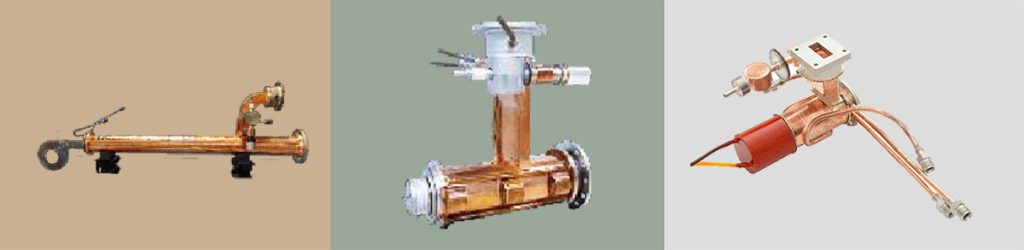
Engineers should focus on the most significant power demand factors when designing an electron beam accelerator. The table below highlights these priorities:
| Factor | Description |
|---|---|
| Energy Levels | Determines penetration depth; low-energy for surface treatments, high-energy for deeper processes. |
| Beam Power | Enhances processing speed; crucial for industries needing large-scale radiation processing. |
| Dose Rates | Affects speed and uniformity of radiation delivery; modern accelerators offer 5 to 10 Gy/min. |
| Irradiation Capabilities | Supports diverse applications like polymer cross-linking and environmental protection, enhancing versatility. |
Engineers can prioritize these factors to improve efficiency, control costs, and boost performance. They can also consider these trends:
- The market is growing in healthcare, aerospace, and food sterilization.
- New systems are becoming more compact and energy-efficient.
- Applications in semiconductor and food processing continue to expand.
FAQ
What Factors Most Affect Power Demand in Electron Beam Accelerators?
Engineers find that beam energy, current, and duty cycle have the greatest impact on power demand. Efficient power supplies and advanced materials also help reduce energy use.
How Can Engineers Improve the Efficiency of an Accelerator?
Engineers can select high-efficiency accelerator types, use energy recovery systems, and choose advanced cooling methods. Regular maintenance and real-time monitoring also help maintain peak efficiency.
Why Is Beam Utilization Important for Power Demand?
Beam utilization ensures that most of the supplied energy contributes to the intended process. High utilization reduces waste and lowers operational costs.
What Role Do Control Systems Play in Power Management?
- Control systems monitor voltage, current, and temperature.
- They help operators adjust settings for optimal performance.
- Automated alerts prevent energy loss and equipment damage.