


E-beam solutions transform orthopedic implant safety and performance by enabling precise manufacturing and reliable sterilization. Medical teams use these technologies to create orthopedic devices that meet strict safety standards. Manufacturers benefit from improved operational logistics and faster speed to market, while patients experience enhanced recovery times. E-beam solutions support material compatibility across medical metals and polymers in orthopedics, ensuring consistent sterilization without compromising device integrity.
Key Takeaways
- E-beam solutions enhance the safety and performance of orthopedic implants through precise manufacturing and reliable sterilization.
- Personalized implants created with e-beam technology improve surgical outcomes and reduce recovery times for patients.
- E-beam processing minimizes material waste and speeds up production, benefiting manufacturers with cost savings.
- The use of electron beam sterilization ensures clean implants without harmful chemical residues, promoting patient safety.
- Advanced 3D printing and e-beam technology allow for the creation of complex implant designs that match individual patient needs.
E-Beam Solutions in Orthopedic Implants
Technology Overview
Orthopedic implants rely on advanced e-beam solutions to achieve high safety and performance standards. Electron beam melting (EBM) stands out as a leading additive manufacturing technology in orthopedic device production. EBM uses electron beam irradiation equipment to selectively melt titanium alloy powder, layer by layer, following precise computer-aided design data. This process enables the creation of complex 3d geometries and porous structures in a single step. Orthopedic surgeons and engineers value EBM for its ability to produce 3d-printed titanium implants that match patient anatomy and support bone integration.
Electron-beam processing also plays a vital role in sterilizing orthopedic implants. The high-energy beam ensures that each medical device meets strict cleanliness requirements without damaging sensitive materials. E-beam sterilization supports both metals and polymers, making it a versatile solution in medical device manufacturing. Orthopedic teams trust electron-beam processing for its reliability and efficiency.
Integration in Manufacturing
Manufacturers integrate e-beam solutions into the 3d printing workflow to optimize orthopedic implant production. EBM operates in a high vacuum, which prevents contamination of titanium and titanium-based alloys. This environment is essential for producing 3d-printed titanium implants with consistent quality. The technology allows for rapid additive printing, reducing material waste and speeding up production cycles. Orthopedic specialists use 3d printing to design implants with macro-porosity, which helps bone cells grow into the implant and improves long-term outcomes.
Note: EBM enables the personalization of orthopedic implants by using finite element modeling to simulate physiological loading conditions. This approach ensures that each implant matches the patient’s needs.
Material compatibility remains a key factor in orthopedic additive manufacturing. The table below summarizes how common materials perform with e-beam processes:
| Material | Properties and Compatibility |
|---|---|
| Ti-6Al-4V | Used for monolithic implants; limited by stress shielding and lack of fusion; benefits from a stable passive film. |
| Co-29Cr-6Mo | Harder and more wear-resistant; commonly used in knee implants; allows for efficient bone cell ingrowth. |
| EBM Process | Enables fabrication of patient-specific implants with optimal stiffness and mechanical properties for bone integration. |
Cost considerations also influence the adoption of e-beam solutions in orthopedic additive manufacturing:
| Cost Factor | E-Beam Solutions | Traditional Methods |
|---|---|---|
| Initial Investment | Higher upfront costs due to advanced technology and specialized equipment | Lower initial costs |
| Material Waste | Reduced material waste through optimized utilization | Higher material waste |
| Production Speed | Faster production cycles, leading to quicker time-to-market | Slower production cycles |
| Long-term Savings | Lower operational costs due to efficient material usage | Higher ongoing costs |
| Workforce Training | Requires specialized skills for operation | Standard skills may suffice |
Orthopedic teams continue to advance 3d printing and additive manufacturing by leveraging e-beam and electron-beam processing. These technologies support the production of safe, effective, and personalized orthopedic implants.
Performance Benefits for Implants
Wear Resistance
Orthopedic implants face constant friction and stress inside the human body. E-beam processing improves wear resistance by refining the microstructure of metals like titanium alloys. Engineers select electron beam melting (EBM) because it produces a finer grain structure, which helps reduce surface wear over time. Ti-6Al-4V, a popular alloy for orthopedic devices, demonstrates high mechanical strength and low density. These properties make it suitable for joint replacements and bone plates. EBM also allows for the creation of complex surface textures, which further enhance durability. Orthopedic surgeons rely on these improvements to extend the lifespan of implants and minimize complications related to wear.
Tip: E-beam solutions enable manufacturers to tailor the surface roughness of implants, which can reduce friction and improve long-term stability.
Fatigue Strength
Fatigue strength determines how well orthopedic implants withstand repeated loading cycles. E-beam processing influences this property by controlling the microstructure and reducing defects. The following table summarizes the measured effects of e-beam processing on fatigue strength in different loading directions:
| Loading Direction | Fatigue Strength (MPa) at 5 × 10^6 cycles | Notes |
|---|---|---|
| [001]//LD | ∼190 | Highest fatigue strength observed |
| [011]//LD | ∼24 | Low fatigue strength due to cracks |
| [111]//LD | ∼24 | Low fatigue strength due to cracks |
Orthopedic teams observe that EBM creates a finer microstructure, which can enhance fatigue life. However, defects such as pores or incomplete fusion may reduce this benefit. The table below explains how microstructure and defects impact fatigue strength:
| Evidence Description | Impact on Fatigue Strength |
|---|---|
| Finer microstructure from EBM | Expected to enhance fatigue life |
| Processing-induced defects (pores, lack of fusion) | Can outweigh benefits of finer microstructure |
| EBM iron shows better corrosion behavior | May help counterbalance negative effects of defects |
| EBM iron can be tailored for mechanical and corrosion properties | Adaptability enhances suitability for various orthopedic applications |
Orthopedic specialists choose EBM for its ability to customize mechanical properties, which helps match the demands of different anatomical locations.
Osseointegration
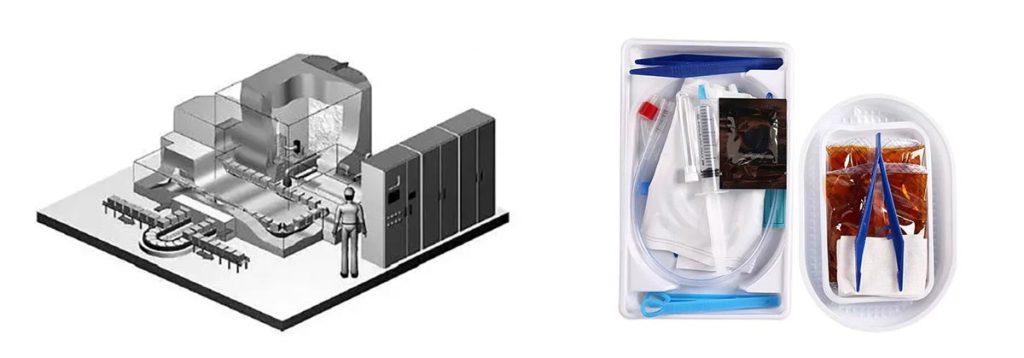
Osseointegration refers to the process where bone tissue grows into the surface of an implant. E-beam solutions play a critical role in enhancing this property. EBM enables the fabrication of porous structures that mimic natural bone architecture. Ti-6Al-4V Voronoi scaffolds, designed using mathematical models, create interconnected networks that support bone ingrowth. The following table highlights key findings from clinical and laboratory studies:
| Evidence Type | Findings |
|---|---|
| Porous Structures | Enhanced bone ingrowth due to interconnected networks in Ti-6Al-4V scaffolds |
| Voronoi Diagram | Mimics natural bone architecture, improving osseointegration |
| Elastic Modulus | Reduced elastic modulus of implants due to porous design |
Researchers have found that scaffold pore size affects cell proliferation and bone formation. The table below compares different scaffold types:
| Scaffold Type | Pore Size | Performance |
|---|---|---|
| VBTS (596 μm) | 596 μm | Best for promoting cell proliferation and osteogenic differentiation |
| Control (Cubic) | N/A | Baseline for comparison |
| Other VBTSs | 1044 μm | Less effective than 596 μm scaffold |
Orthopedic surgeons select EBM-produced implants with optimized pore sizes to maximize osseointegration and improve patient outcomes. These advances contribute to longer-lasting implants and faster recovery.
Note: Electron beam technology offers geometric freedom, material versatility, and manufacturing speed that surpass many other advanced manufacturing methods. Ti alloys like Ti-6Al-4V are highly researched for orthopedic applications because they combine high strength, corrosion resistance, and biocompatibility.
E-Beam in Orthopedic Surgery
Clinical Applications
Orthopedic surgery teams use e-beam technology to advance skeletal repair and prosthetic rehabilitation. E-beam solutions enable precise fabrication of medical devices that support bone healing and joint restoration. Surgeons select 3d-printed patient-specific implants for complex fractures and revision procedures. These devices match the anatomical structure of each patient, improving surgical alignment and stability. Medical professionals rely on e-beam processing to produce biomaterials with optimal mechanical properties for orthopedic implants. The integration of 3d printing and e-beam manufacturing allows for rapid production of personalized orthopedic solutions, reducing wait times for surgery.
Orthopedic specialists apply e-beam technology in procedures such as spinal fusion, joint replacement, and limb reconstruction. Medical devices created with e-beam methods demonstrate enhanced biocompatibility and durability. Surgeons observe improved outcomes in orthopedic surgery when using patient-specific implants designed with advanced biomaterials. The following table summarizes the impact of 3d printing and e-beam manufacturing on patient recovery outcomes:
| Evidence Type | Findings |
|---|---|
| 3D Printing Benefits | Improved functional outcomes, shorter recovery times, enhanced quality of life compared to traditional methods. |
| Custom Implants | Tailored to individual anatomical needs, promoting osseointegration and reducing complications. |
| Surgical Precision | Navigation-assisted resection combined with patient-specific implants leads to optimal oncological margins with minimal tissue trauma. |
Patient-Specific Solutions
Patient-specific implants transform orthopedic surgery by offering tailored medical devices for each individual. Surgeons use 3d modeling to design implants that fit unique anatomical features. Orthopedic teams select biomaterials compatible with e-beam processing to ensure safety and performance. Personalized orthopedic solutions reduce the risk of complications and promote faster healing. Medical device manufacturers utilize 3d printing and e-beam technology to create patient-specific implants with precise geometry and surface characteristics.
Orthopedic surgery benefits from reduced operating room time and anesthesia duration due to the accuracy of patient-specific implants. Medical professionals report that customization of device morphology enhances surgical outcomes. Improved accuracy in procedures leads to better long-term functionality for patients. The following points highlight the advantages of patient-specific implants in orthopedic surgery:
- Customization of device morphology enhances surgical outcomes.
- Reduction in operating room time and anesthesia duration leads to quicker recovery.
- Improved accuracy of procedures positively influences long-term patient functionality.
Orthopedic teams continue to innovate with 3d printing, e-beam manufacturing, and advanced biomaterials. Patient-specific implants and medical devices support better recovery and quality of life for individuals undergoing orthopedic surgery.
Safety and Sterilization
Electron Beam Sterilization
Electron beam sterilization plays a vital role in ensuring the safety of orthopedic implants. This method uses high-energy electrons to eliminate bacteria and viruses from 3d-printed medical devices. Unlike traditional sterilization techniques, electron beam sterilization does not introduce hazardous chemicals or leave behind chemical residues. The process also has a minimal environmental impact, making it a preferred choice for integrated sterilization in orthopedic manufacturing.
| Safety Advantage | Electron Beam Sterilization (EBS) | ETO (Ethylene Oxide) | Gamma Radiation |
|---|---|---|---|
| Hazardous Chemicals | No | Yes | No |
| Chemical Residues | None | Yes | No |
| Environmental Impact | Minimal | Significant | Significant |
Regulatory standards guide the use of electron beam sterilization in orthopedic implant production. ISO 11137 provides detailed requirements for validation and routine control. The EU MDR emphasizes risk management and device safety, while the FDA requires strict validation and sterility testing.
| Standard | Description |
|---|---|
| ISO 11137 | Provides guidelines for electron beam radiation sterilization, including requirements for validation and routine control of sterilization processes. |
| EU MDR | Establishes requirements for sterilization processes, emphasizing validation, risk management, and ensuring device safety and performance. |
| FDA | Requires validation of sterilization methods to meet safety and efficacy standards, including dose mapping and sterility testing. |
Material Compatibility
Orthopedic teams select materials for 3d-printed implants based on their compatibility with electron beam sterilization. Metals like aluminum, stainless steel, and titanium show high compatibility and maintain their medical-grade performance after exposure. Polymers such as PEEK and polysulfones also perform well, supporting biocompatibility and durability. The chart below compares compatibility ratings for common orthopedic materials:
Electron beam exposure can modify the mechanical and chemical properties of 3d-printed medical materials. For example:
- Metals gain increased hardness and improved corrosion resistance.
- Polymers like PEEK and PMMA may experience changes in elasticity and strength, supporting biocompatibility.
- Ceramics and composites can undergo structural changes, which may affect their use in orthopedic applications.
However, some risks exist. High-energy irradiation can reduce the osteoinductive properties of allogenic bone grafts and damage the structure of certain biopolymers. Orthopedic specialists must evaluate each material using biocompatibility related material evaluations to ensure optimal 3d implant performance and patient safety.
Conclusion
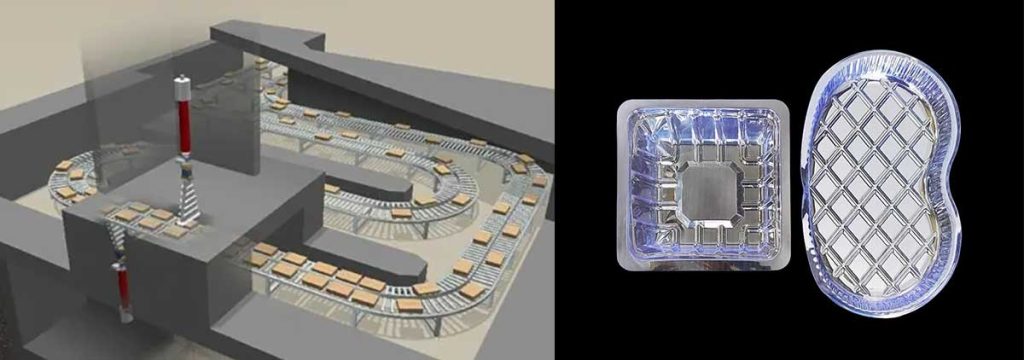
Integrated e-beam solutions deliver significant improvements in orthopedic implant safety, performance, and patient outcomes. Orthopedic teams rely on advanced 3D printing and metal additive manufacturing to create medical implants with complex geometries and enhanced biocompatibility. Medical professionals observe better recovery and satisfaction among orthopedic patients. Manufacturers achieve cost savings and efficient production.
- Healthcare providers see improved orthopedic patient outcomes.
- Patients benefit from personalized orthopedic medical implants.
- Manufacturers reduce waste and optimize orthopedic implant design.
Orthopedic innovation will continue to advance as e-beam technology evolves, shaping the future of medical implant manufacturing and orthopedic surgery.
FAQ
What Is Electron Beam Melting (EBM) in Implant Manufacturing?
Electron beam melting uses a focused beam to melt metal powder layer by layer. Engineers create complex shapes for implants. This process supports strong and lightweight devices. Surgeons select EBM implants for precise fit and improved healing.
How Does Electron Beam Sterilization Improve Implant Safety?
Electron beam sterilization destroys bacteria and viruses on medical devices. The process does not leave chemical residues. Hospitals trust this method for clean implants. Patients benefit from reduced infection risk after surgery.
Can E-Beam Technology Create Patient-Specific Implants?
E-beam technology enables manufacturers to design implants that match each patient’s anatomy. Engineers use 3D modeling for custom shapes. Surgeons choose these implants for better fit and faster recovery.
Which Materials Work Best with E-Beam Processing?
Titanium alloys, stainless steel, and polymers like PEEK perform well with e-beam processing. These materials keep their strength and biocompatibility. Orthopedic teams select them for reliable implant performance.
Does E-Beam Processing Affect Implant Longevity?
E-beam processing refines the microstructure of metals. Implants show improved wear resistance and fatigue strength. Patients experience longer-lasting devices and fewer complications.