


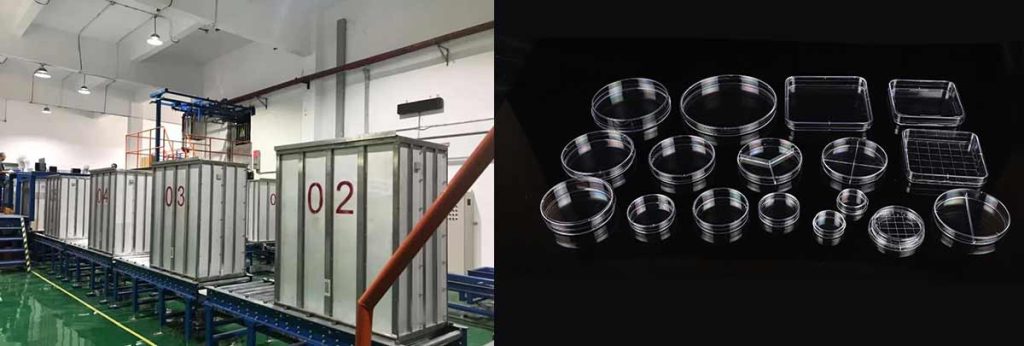
Radiation safety systems protect workers, patients, and the environment from harmful radiation exposure. Shielding materials play a key role:
- Lead provides strong protection against gamma rays and X-rays due to its high density.
- Lead-free alternatives, such as tungsten, tin, bismuth, and antimony, offer safer options.
- Lead composites combine lead with rubber or plastic for flexibility and reduced weight.
Proper calibration and quality management ensure these systems function accurately. International standards guide installation and verification, as shown below:
| Standard | Description |
|---|---|
| IAEA Safety Standards Series No. GSR Part 3 | Outlines basic safety standards for radiation protection and safety of sources. |
| Collaborative Organizations | Multiple organizations sponsor the standard, including the IAEA and WHO. |
| Basis for Standards | Standards rely on biological effects of radiation and protection principles. |
Key Takeaways
- Radiation safety systems protect against harmful radiation. Proper shielding materials, like lead and lead-free alternatives, are essential for safety.
- Conduct thorough site assessments before installation. This includes historical reviews and final surveys to ensure compliance with safety standards.
- Regular calibration of radiation safety instruments is crucial. Annual checks help maintain accuracy and meet regulatory requirements.
- Documentation is vital for compliance. Keep records of audits, monitoring results, and program changes for at least five years.
- Routine checks and re-certification ensure ongoing safety. Regular training and audits help maintain high standards and prevent exposure risks.
Pre-Installation
Site Assessment
A thorough site assessment forms the foundation for safe installation of radiation safety systems. The process follows a structured approach:
- Historical Radiological Assessment (HRA): Teams review records to identify past radiological activities and any residual contamination.
- Preliminary Assessment (PA): Investigators examine historical documents and conduct interviews to determine if the site has been impacted.
- Sampling and Surveying: Specialists collect samples and perform surveys when initial findings suggest possible contamination.
- Final Status Survey (FSS): After remediation, experts conduct a final survey to confirm the site meets safety standards for unrestricted use.
Tip: Early identification of hazards during site assessment helps prevent costly delays and ensures compliance with safety regulations.
Regulatory Review
Regulatory agencies set strict requirements for the installation of radiation protection systems. Key agencies include:
- OSHA (Occupational Safety and Health Administration)
- NRC (Nuclear Regulatory Commission)
- DOE (Department of Energy)
Common compliance issues involve missing system registrations, lack of a written Radiation Protection Plan, and failure to provide operator training. Facilities often overlook routine inspections, annual calibration of detection instruments, and proper documentation. Noncompliance can result in severe penalties, including civil fines up to $37,500 per violation per day and, in extreme cases, criminal charges with fines up to $250,000 or imprisonment.
Risk Analysis
Risk analysis evaluates potential hazards before installing safety systems. Several methodologies guide this process:
| Methodology | Description |
|---|---|
| Prospective Hazard Analysis (PHA) | Assesses and defines hazards, prioritizes them, and reassesses after mitigation strategies. |
| Failure Modes and Effects Analysis (FMEA) | Identifies possible failure modes, evaluates their impact, and prioritizes risks. |
| System Theoretic Process Analysis (STPA) | Uses system theory to identify and mitigate hazards. |
| Fault Tree Analysis (FTA) | Analyzes failure pathways starting from an undesirable outcome. |
FMEA stands out for its ability to prioritize risks based on severity, likelihood, and detectability. This systematic approach supports the development of effective mitigation strategies.
Radiation Safety Systems Installation
System Selection
Selecting the right radiation safety systems requires careful evaluation of facility needs and regulatory requirements. Teams consider the type of radiation sources, expected exposure levels, and the physical layout of the site. Modern systems often feature advanced technologies such as semiconductor detectors for high-resolution measurements and scintillation detectors that convert radiation into light for accurate readings. Digital integration has become standard, with real-time monitoring dashboards and AI-driven alerts that improve situational awareness. Recent innovations include FDA-approved DoseRT technology, which captures emissions during treatment and works with AlignRT to monitor patient positioning. These advancements help ensure precise radiation delivery and enhance patient safety.
Tip: Facilities should consult with a Radiation Safety Officer and review both state and federal regulations before making final system selections.
Installation Steps
Successful installation of radiation safety systems follows a structured process. Teams avoid common pitfalls by adhering to established steps:
- Identify a Radiation Safety Officer.
- Obtain copies of state and federal regulations.
- Set up administrative documents and a quality assurance program.
- Establish a Radiation Safety Committee.
- Install shielding in X-ray rooms.
- Register radiation machines and apply for a radioactive materials license.
- Set up a personnel monitoring program.
- Maintain thorough recordkeeping.
Each step supports compliance and long-term reliability. Shielding installation, for example, uses materials like lead or lead-free composites to protect staff and patients. Administrative controls and monitoring programs help track exposure and maintain safety standards.
Integration
Integrating new radiation safety systems with existing infrastructure requires attention to interoperability standards. The IHE-RO initiative plays a key role in radiation oncology by promoting connectivity and standardized solutions. Facilities use DICOM and HL7 standards to ensure effective data exchange between devices and software platforms. Annual Connectathons test and validate these integrations, resolving connectivity issues and improving workflow efficiency.
- IHE-RO enhances interoperability in radiation oncology.
- DICOM and HL7 standards support seamless data exchange.
- Standardized solutions and annual Connectathons validate system integration.
Facilities benefit from these standards by reducing errors and improving the reliability of safety systems.
Electron Beam Irradiation Equipment
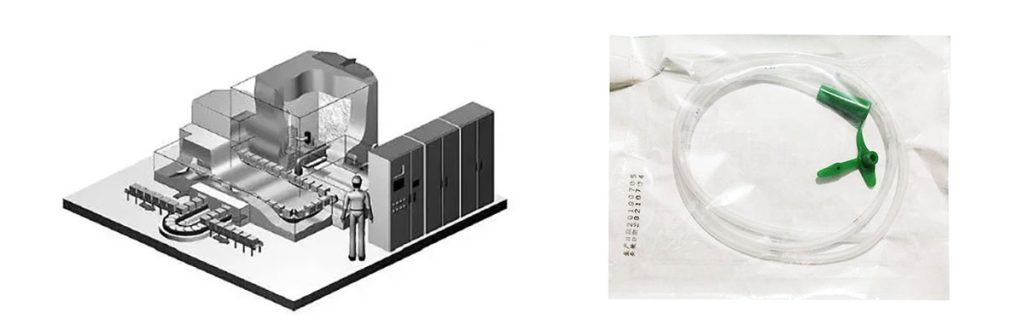
Electron beam irradiation equipment presents unique challenges for installation and quality management. Teams conduct critical examinations to assess potential radiation protection implications. Acceptance testing verifies equipment specifications and safety features before commissioning. Commissioning establishes baseline values for clinical use and optimizes protocols for patient safety. Routine performance testing ensures equipment stability and reliability over time.
| Aspect | Description |
|---|---|
| Critical Examination | Assesses installation for potential radiation protection implications. |
| Acceptance Testing | Verifies equipment specifications and safety features before commissioning. |
| Commissioning | Establishes baseline values for clinical use and optimizes protocols for patient safety. |
| Routine Performance Testing | Regular checks to ensure stability and performance of e-beam equipment, crucial for long-term reliability. |
Quality management systems follow standards from organizations such as WHO and IAEA. Directive 97/43/EURATOM mandates quality assurance and clinical audits in healthcare units using ionizing radiation. Many institutions adopt the PN-EN ISO 9001:2001 standard to maintain high levels of safety and reliability.
Note: Advanced systems like Soteria.AI use AI technology for dynamic collimation, reducing radiation exposure while maintaining image quality. These innovations improve patient safety and integrate smoothly with existing workflows.
Verification
Initial Testing
Initial testing confirms that radiation safety systems operate as intended before clinical use. Teams follow strict protocols to check equipment performance and safety features. Daily checks include equipment functioning, CT number accuracy, image noise, and image uniformity. Monthly tests focus on imaged slice thickness, slice positioning accuracy, and CT number scale accuracy. Radiographic timer accuracy is verified semiannually. These benchmarks help facilities identify issues early and maintain compliance with safety standards.
| Testing Protocols | Frequency |
|---|---|
| Equipment functioning checks | Daily |
| CT Number Accuracy, Image Noise, Image Uniformity | Daily |
| Imaged Slice Thickness | Monthly |
| Slice Positioning Accuracy | Monthly |
| CT Number Scale Accuracy | Monthly |
| Radiographic Timer Accuracy | Semiannually |
Regular initial testing ensures that all components meet regulatory benchmarks and function safely.
Calibration
Calibration guarantees that instruments used in radiation safety systems provide accurate measurements. Regulatory agencies require annual calibration for all radiation safety instruments. Survey meters in research labs and other quantitative measurement locations must also undergo this process. If an instrument fails calibration, staff must tag it as ‘out-of-service’ and remove it from use. Only Environmental Health and Safety (EHS) teams or licensed vendors can perform calibration.
- Radiation safety instruments require calibration at least once a year.
- Survey meters in research and clinical settings must be calibrated for quantitative measurements.
- Out-of-calibration instruments are tagged ‘out-of-service’ and cannot be used.
- Only EHS or licensed vendors may perform calibration.
Calibration supports reliable monitoring and helps facilities meet legal and safety requirements.
Documentation
Accurate documentation forms the backbone of compliance and quality assurance in radiation safety systems. Facilities must keep records of program changes, audits, and individual monitoring results for at least five years. Annual reviews of the radiation safety program are essential. Staff should store records of protective device testing in a central, accessible location. Patient health records must include diagnostic and therapeutic radiation doses, details of protective devices, and skin assessments before and after procedures.
- Maintain records of program changes, audits, and monitoring results for five years.
- Review the radiation safety program annually.
- Store protective device testing records centrally.
- Document all patient-related radiation details in health records.
- Ensure records are legible, accurate, and available for inspection.
- Include facility identification, preparer’s signature, and date on all records.
Proper documentation ensures traceability, supports audits, and demonstrates compliance with regulatory standards.
Record and Verify System
Record and Verify systems play a critical role in radiation therapy by tracking treatment parameters and preventing errors. These systems automatically compare planned and delivered doses, reducing the risk of mistakes. Studies show that even with advanced technology, errors can occur. Huang et al. (2005) found 555 errors among 28,136 patient treatments, averaging 1.97 errors per 100 patients. Bissonnette et al. (2010) reported an incident rate of 1.7 per 100 radiotherapy courses.
| Study | Findings |
|---|---|
| Huang et al. (2005) | 555 errors among 28,136 treatments (1.97 errors per 100 patients) |
| Bissonnette et al. (2010) | 1.7 incidents per 100 radiotherapy courses |
The Treatment Record and Review System (TRRS) follows international standards such as ISO 13485 and IEC 62304. These standards ensure the system’s reliability and effectiveness in enhancing patient safety.
Developing an incident learning system is crucial for identifying and responding to incidents, creating an atmosphere for institutional learning. This includes a nationwide public mandatory reporting system and voluntary reporting systems to improve patient safety.
Lessons from reported incidents highlight the need for continuous improvement:
- Patient safety must always remain the top priority.
- Transparent reporting and communication are essential.
- Operators need comprehensive training on medical radiation equipment.
- Medical linear accelerators should have hardware interlocks.
- Risk assessment and management must be integral to equipment use.
- Regulatory agencies should enforce stringent safety standards.
- Safety protocols require ongoing updates and improvements.
Human error accounts for over 60% of incidents, especially with complex new technologies. Increased vigilance and robust verification systems help reduce these risks and protect patients.
Maintenance
Routine Checks
Routine checks help facilities maintain the effectiveness of radiation safety systems. Teams perform surveys at specific intervals to detect issues early and prevent exposure risks. The following table shows recommended frequencies for common surveys:
| Type of Survey | Recommended Frequency |
|---|---|
| Radiation Protection Survey | After an experiment or minor spill |
| Radioactive Sealed Source Survey | Semi-annual |
| Bioassay Survey | As needed based on exposure risk |
Staff members inspect shielding, monitor equipment performance, and verify alarm systems. These checks ensure that all components function correctly and meet safety standards. Facilities often use checklists to track completed tasks and identify areas needing attention.
Regular routine checks reduce the chance of undetected hazards and support a safe working environment.
Re-Certification
Re-certification confirms that radiation safety systems continue to meet regulatory requirements after initial installation. Facilities schedule re-certification at intervals set by local and federal agencies. Inspectors review equipment calibration, shielding integrity, and staff training records. They also verify that all documentation remains current and accurate.
Best practices for ongoing compliance include several key steps:
- Continuous training keeps staff updated on new procedures and technologies. Refresher courses and competency checks occur frequently.
- Regular audits and quality assurance checks on protective equipment help prevent exposure risks.
- Efficient recordkeeping ensures that radiation doses, equipment checks, and incident reports remain accessible for management and inspection.
- Clear communication channels allow staff to report safety concerns quickly.
Facilities that follow these practices maintain high standards and avoid penalties.
Troubleshooting
Troubleshooting addresses problems that arise during the operation of radiation safety systems. Technicians respond to equipment malfunctions, alarm failures, or unexpected radiation readings. They use diagnostic tools to identify the source of the issue and implement corrective actions. Staff document each incident and solution to support future problem-solving.
Facilities encourage open communication among team members. Quick reporting and response help minimize downtime and protect staff and patients. Routine troubleshooting ensures that systems remain reliable and safe throughout their lifespan.
Proactive troubleshooting and documentation create a culture of safety and continuous improvement.
Conclusion
Radiation safety systems require careful installation, thorough verification, and regular maintenance. Facilities that follow strict safety protocols achieve better patient safety and lower radiation exposure, as shown below:
| Compliance Level | Outcome Description |
|---|---|
| High Compliance | Better patient safety and reduced radiation exposure |
| Low Compliance | Increased risks and potential overexposure |
Continuous improvement depends on staff training, a strong safety culture, and adherence to protocols. Facilities should review safety procedures regularly and encourage reporting of hazards. A commitment to compliance and quality management protects both staff and patients.
FAQ
What Materials Provide the Best Shielding Against Radiation?
Lead offers strong protection against X-rays and gamma rays. Tungsten, tin, and bismuth serve as effective lead-free alternatives. Facilities often use lead composites for flexibility and reduced weight. Selection depends on the type of radiation and the specific application.
How Often Should Radiation Safety Equipment Be Calibrated?
Regulatory agencies require annual calibration for all radiation safety instruments. Environmental Health and Safety teams or licensed vendors perform these calibrations. Regular calibration ensures accurate measurements and maintains compliance with safety standards.
Who Oversees Radiation Safety in a Facility?
A Radiation Safety Officer manages the program. This person coordinates training, monitors exposure, and ensures compliance with regulations. The Radiation Safety Committee supports the officer by reviewing policies and procedures.
Why Is Documentation Important in Radiation Safety?
Accurate documentation tracks equipment checks, staff training, and patient doses. Records support audits and inspections. Facilities must keep documentation for at least five years to meet regulatory requirements and maintain a safe environment.
What Should Staff Do If They Detect a Radiation Safety Issue?
Staff must report issues immediately to the Radiation Safety Officer. Quick reporting allows for prompt investigation and corrective action. Facilities encourage open communication to maintain safety and prevent exposure risks.