


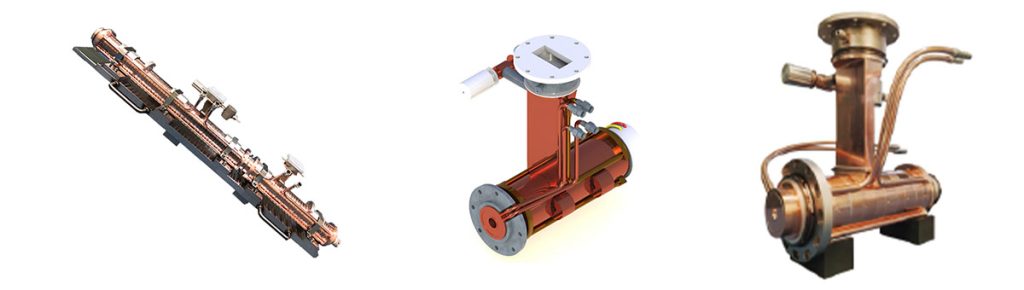
Radiation surveys in e-beam accelerator allow teams to directly measure how well shielding protects people and equipment. Detecting potential leaks helps maintain safety and ensures that the linear accelerator operates within strict limits. Technicians often use quantitative data, such as changes in dose distribution at different lead thicknesses and electron beam energies, to evaluate shielding. For example, measurements show clear dose reductions when the lead thickness increases from 1 mm to 7 mm as electron beam energy rises from 6 MeV to 20 MeV. These surveys support radiation therapy centers by confirming that shielding meets regulatory standards and protects both staff and patients.
Key Takeaways
- Radiation surveys are essential for confirming that shielding effectively protects staff and patients in e-beam accelerator facilities.
- Regular monitoring of radiation levels helps identify potential safety issues before they become serious risks.
- Compliance with regulatory standards is crucial; facilities must demonstrate that radiation levels remain below established limits.
- Selecting the right materials and designing effective layouts are key to ensuring adequate shielding in accelerator rooms.
- Quick corrective actions are necessary when shielding issues arise, ensuring ongoing safety and protection from radiation.
Importance of Shielding Evaluation in E-Beam Accelerator
Radiation Safety and Dose Reduction
Shielding evaluation plays a vital role in maintaining radiation safety in e-beam accelerator. Teams monitor radiation levels to prevent exposure that could harm staff or patients. Shielding, such as concrete barriers and lead panels, helps reduce dose rates in areas surrounding the accelerator. For example, lead shielding can achieve up to 98% attenuation for electron beams, with thicknesses ranging from 2.6 mm to 27.5 mm depending on the field size and energy. Concrete walls also contribute to lowering radiation levels, especially in high-energy environments. Regular assessment of shielding ensures that electron beam irradiation equipment operates safely and that dose reduction targets are met.
Tip: Consistent monitoring of radiation levels helps identify radiation safety issues before they become risks.
Regulatory Compliance and Facility Validation
Shielding evaluation directly impacts regulatory compliance and facility validation. Authorities require facilities to demonstrate that radiation levels remain below established limits. If exposure rates under IMRT conditions exceed original shielding values, teams must add more shielding or limit the number of patients treated each day. These adjustments help facilities maintain compliance and avoid penalties. Shielding evaluation also validates new installations of electron beam irradiation equipment, confirming that safety standards are met from the start.
- Shielding evaluations ensure exposure rates do not exceed regulatory limits.
- Facilities may need to adjust operational practices based on evaluation results.
- Compliance rates improve when teams respond quickly to shielding concerns.
Shielding Materials and Design Considerations
Shielding design relies on selecting appropriate materials and planning effective layouts. Concrete remains the most common choice for constructing barriers in e-beam accelerator. Teams use concrete because it absorbs radiation efficiently and provides structural support. Lead panels supplement concrete barriers, especially in areas with higher radiation levels. Shielding design considers the type of electron beam irradiation equipment, expected dose rates, and room geometry. Engineers calculate the required thickness of concrete and lead to ensure radiation safety for everyone in the facility.
| Material | Typical Use | Dose Reduction Effectiveness |
|---|---|---|
| Concrete | Walls, barriers | High |
| Lead | Panels, doors | Very High |
Shielding evaluation confirms that these materials and designs protect against radiation and support safe operation of the accelerator.
Radiation Survey Process in E-Beam Accelerator
Survey Planning and Critical Area Identification
A complete shielding survey begins with careful planning. Teams identify critical areas where radiation may escape or where personnel spend significant time. They review facility blueprints and mark locations near the e-beam accelerator, such as control rooms, entryways, and service corridors. During the initial survey, technicians assess these zones for possible shielding weaknesses. They consider the geometry of the room and the placement of shielding materials. The survey helps teams focus on high-risk spots and ensures that testing covers all necessary locations.
Note: Survey planning reduces the chance of missing hidden leaks and supports thorough evaluation of shielding effectiveness.
Detector Selection and Calibration
Detector selection plays a key role in the accuracy of a radiation survey. Ionization chambers often serve as the primary tool for dosimetry, but they face challenges at high dose rates due to ion recombination effects. To overcome these limitations, teams use passive detectors like EBT3 radiochromic film and alanine. These detectors work independently of dose rate and provide reliable measurements in electron fields.
Calibration ensures that detectors produce accurate results during testing. The process involves several steps, each designed to match detector response to known standards. The table below outlines the typical calibration procedure:
| Calibration Step | Description |
|---|---|
| Profile Acquisition | Profiles are acquired using a double-wedge phantom to determine off-axis distance (OAD). |
| OAD50 Measurement | The OAD50 is measured, corresponding to a 50% signal reduction on the central axis. |
| FWHM Calculation | The full width at half maximum (FWHM) of the diagonal profile is calculated as the energy metric. |
| Calibration of R50 | A linear fit is established between R50 in water and FWHM using known R50 values. |
| Application | The calibration is applied to measure R50 on beams from similar linear accelerators. |
Measurement Execution and Data Mapping
Survey teams execute radiation measurements using established protocols and quality assurance methods. They perform regular checks to ensure the absorbed dose delivery remains within ±5%. Technicians follow dosimetry protocols such as NACP1980, HPA 1983, and IAEA 2000 to measure physical parameters of megavoltage photons and electron beams. In-phantom measurements help detect changes in beam output over time.

The measurement process includes several steps:
- Teams conduct quality assurance checks to verify dose accuracy.
- They use dosimetry protocols to measure beam parameters.
- Technicians perform ionization measurements in reproducible geometry and field conditions.
- They monitor for systematic shifts in absorbed dose greater than 2% and adjust treatment planning systems if needed.
- Weekly checks confirm dose output and energy consistency using lucite phantom sheets and ionization chambers.
- Electron beam measurements are performed weekly, adjusting for ambient conditions to represent output and penetration curves.
Survey teams map the collected data to visualize radiation levels throughout the facility. This mapping highlights areas where shielding may be insufficient or where leaks could occur. The survey process helps teams detect breaks in shielding and guides corrective actions.
Common challenges during a radiation survey include:
- Establishing sufficient distance from radiation sources can be impractical, especially when personnel must work on activated materials.
- Shielding methods, such as lead-equivalent blankets, may not be practical due to the distribution of radiation sources.
- Reducing exposure time often proves most effective for minimizing personal dose during maintenance.
- The complexity of radiation fields complicates measurements.
- Inadequate measurement technologies, such as rem counters, may not suit high-energy accelerators.
- Applying distance and shielding to minimize exposure can be difficult.
A complete shielding survey provides a comprehensive assessment of the facility. Teams use the results to confirm that shielding protects against radiation and supports safe operation of the e-beam accelerator.
Interpreting Shielding Evaluation Results
Comparing Data to Safety Standards
Survey teams analyze the collected data by comparing measured dose rates and exposure levels to established safety standards. These standards help determine if the facility operates within safe limits. Good engineering design prevents unauthorized access to radiation sources during operation. Teams use control measures such as training, audits, and inspections to maintain a safe work environment. Before starting operations, a final radiation survey ensures that personnel can accurately assess radiation levels. Survey instruments, like Geiger-Mueller probes, detect radiation effectively in different facility areas. Sometimes, dosimetry is necessary, especially when there is no previous record of personnel exposure. Regular evaluations of the radiation program, at least once a year, help maintain compliance with safety standards.
Radiation survey results must also meet regulatory dose limits. For example, the ZEUS system sets a design goal to keep the hourly dose below 0.02 mSv/h and the annual dose under 1 mSv/year. Regulatory dose limits often range from 2.5 μSv to 20 μSv per hour, depending on local rules and operational needs. Annual dose limits usually stay below 1 mSv to 5 mSv. By comparing survey data to these limits, teams confirm whether the facility meets all safety requirements.
Tip: Regularly reviewing safety standards and dose limits helps facilities stay compliant and protect workers.
Assessing Shielding Effectiveness
After collecting and comparing data, teams assess the effectiveness of shielding by using specific criteria. These criteria ensure that the radiation shielding effect meets both national and international standards. The table below outlines the main criteria used during evaluation:
| Criteria | Description |
|---|---|
| Dose Rate Measurements | Teams measure instantaneous dose rates under different conditions to ensure personnel safety. |
| Compliance with Standards | Facilities compare results to both local and international standards for treatment room safety. |
| Average Dose Equivalent Rate | Teams use time-averaged dose rates and instantaneous dose rates as key indicators. |
| Maximum Workload Evaluation | Shielding must keep radiation levels below public dose limits, even at maximum workload. |
| Acceptable Dose Limit | The value of Hc serves as the acceptable dose limit for compliance. |
| Additional Shielding Requirements | Teams may need to add more shielding or increase room size to meet protection regulations. |
If the evaluation shows that dose rates exceed acceptable limits, teams must take corrective actions. These actions may include adding more shielding or changing operational practices. The evaluation process ensures that the e-beam accelerator operates safely and that the shielding provides effective protection.
Documentation and Reporting
Accurate documentation and reporting play a crucial role in radiation safety. Survey teams record all findings from area monitoring, including radiation levels, contamination risks, and potential worker exposures. Facilities maintain detailed records and provide dosimetry reports as required by federal or state regulations. These records support compliance and help track long-term trends in radiation exposure.
Internal audit procedures require facilities to review all aspects of the radiation protection program each year. This process ensures that the facility addresses any issues quickly and maintains a strong safety culture. Proper documentation also helps during inspections and supports continuous improvement in shielding and safety practices.
Note: Keeping thorough records of every evaluation and survey helps facilities demonstrate compliance and improve safety over time.
Addressing Shielding Issues and Continuous Improvement
Corrective Actions for Insufficient Shielding
When survey teams find that shielding does not meet safety standards, they act quickly to reduce risks. They often install additional barriers or modify existing structures. Some teams use X-ray shielding sheets, which can lower dose rates by 40–60%. These sheets allow for continued imaging or treatment while minimizing unnecessary exposure. The design sometimes includes oval holes, so the target area still receives the intended dose. Teams may also:
- Increase the thickness of lead or concrete barriers.
- Add portable shields in high-risk zones.
- Adjust equipment placement to direct radiation away from occupied areas.
These corrective actions help maintain safe conditions in the e-beam accelerator. Teams document every change and verify improvements with follow-up measurements.
Note: Quick response to shielding issues protects both staff and patients from excess radiation.
Follow-Up Surveys and Ongoing Safety
After making corrections, teams conduct follow-up surveys. These surveys confirm that new or improved shielding works as intended. They measure dose rates in all critical areas and compare results to previous data. If the facility still shows high readings, teams repeat the process until all areas meet safety standards.
Ongoing safety depends on regular evaluation. Teams schedule routine surveys and monitor equipment performance. They train staff to recognize signs of shielding failure, such as unexpected alarms or rising dose rates. By keeping detailed records, facilities track trends and spot problems early.
- Routine checks ensure long-term protection.
- Staff training supports a strong safety culture.
- Continuous improvement keeps the e-beam accelerator safe for everyone.
Tip: Never skip regular surveys. Consistent monitoring is the best way to maintain effective shielding and protect against radiation risks.
Conclusion

Radiation surveys help teams confirm that shielding works in e-beam accelerator. Regular checks improve safety and support ongoing improvements in protection strategies. Teams follow best practices to keep workers and patients safe. They maintain compliance with safety standards and protect everyone from unnecessary exposure.
- Routine surveys validate shielding effectiveness.
- Continuous improvement strengthens facility safety.
- Adherence to safety protocols ensures compliance.
FAQ
What Is the Purpose of a Radiation Survey in an E-Beam Accelerator Facility?
A radiation survey checks if shielding blocks harmful radiation. Teams use it to find leaks and confirm that dose rates stay within safe limits. This process protects workers, patients, and equipment from unnecessary exposure.
How Often Should Facilities Conduct Radiation Surveys?
Facilities should perform radiation surveys at least once a year. They also need to survey after any major equipment changes or when adding new shielding. Regular checks help maintain safety and compliance.
Which Instruments Do Technicians Use During Radiation Surveys?
Technicians use ionization chambers, Geiger-Mueller probes, and passive detectors like radiochromic film. Each instrument measures radiation differently. Teams select the best tool based on the type and energy of the radiation.
What Happens If a Survey Finds Shielding Problems?
If a survey finds shielding problems, teams act quickly. They may add more barriers, adjust equipment, or change room layouts. Follow-up surveys confirm that the new shielding works as intended.
Why Is Documentation Important After a Radiation Survey?
Documentation provides a record of survey results, actions taken, and compliance with regulations. It helps facilities track trends, prepare for inspections, and improve safety programs over time.