


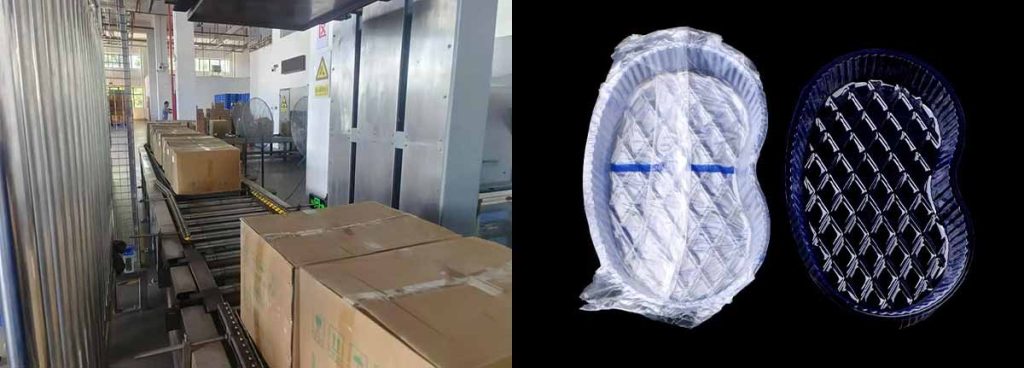
Processing capacity depends on the amount of beam power (kw) delivered to material in a given time. Higher beam power increases throughput in laser cutting, welding, and electron beam sterilization. Accurate measurement allows operators to control speed and efficiency. This metric provides a clear standard for comparing different systems.
Key Takeaways
- Beam power directly influences the speed and quality of material processing. Higher power leads to faster cuts and stronger welds.
- Accurate measurement of beam power is essential for optimizing laser cutting and welding. Regular calibration and environmental control enhance measurement reliability.
- Operators should select the appropriate laser power based on material type and thickness. This ensures optimal performance and quality in manufacturing applications.
Beam Power (kW) Basics
What Is Beam Power?
Beam power (kw) in material processing refers to the total energy emitted as laser light each second. This value shows how much energy a system delivers to a material. The amount of energy depends on the type and thickness of the material. Operators often select the recommended laser power based on these factors. High power lasers can process thicker materials faster. Fiber lasers have become popular because they offer stable and efficient laser power. Many industries use fiber lasers for cutting and welding. The recommended laser power for each job depends on the material and the desired speed. High power lasers can reach several kilowatts, making them suitable for demanding tasks. Fiber lasers also provide consistent laser power, which helps maintain quality.
Why Beam Power Matters?
Beam power affects both the quality and speed of material processing. The right laser power ensures clean cuts and strong welds. Operators choose the recommended laser power to match the job. Fiber lasers deliver precise laser power, which improves results. High power lasers can handle thick metals, while lower laser power works best for thin sheets. The following points show how changes in beam power impact processing:
- Changes in laser power influence heat and temperature, which affect quality.
- Different beam shapes, such as flat-top or annular, can improve results by spreading laser power evenly.
- In metal cutting, a small, high-quality beam from fiber lasers works well for thin materials. Thicker materials need more laser power and a larger beam.
- In welding, the beam profile and laser power affect how deep the weld goes. High power lasers create deeper welds for thick materials.
- Additive manufacturing uses fiber lasers with adjustable laser power to control build rates and part quality. The recommended laser power depends on the material and feature size.
Operators rely on the recommended laser power settings for each application. Fiber lasers and high power lasers offer flexibility and efficiency, making them ideal for modern manufacturing.
Measuring Beam Power for Processing Capacity
Laser Power Measurement
Laser power measurement stands as a critical step in determining processing capacity for industrial applications. Operators rely on precise readings to optimize laser cutting, welding, and engraving. The process involves several steps and specialized tools to ensure accuracy.
- Operators select a sensor designed for laser power measurement. This sensor generates a signal that matches the laser’s output.
- The sensor connects to a meter, which processes the signal and displays the laser power. Calibration adjustments ensure the readings remain accurate.
- The type of laser—continuous wave or pulsed—affects the measurement method. For pulsed lasers, operators may need to measure average power or energy per pulse.
Thermal laser power meters are common in industrial settings. These meters absorb the laser energy and convert it into heat, which the device then translates into a power reading. Photodiode detectors offer another method, especially for lower power levels. Some researchers have introduced a mirrored scale technique, which reflects light to provide a fast and cost-effective measurement. This method works well for portable and efficient industrial applications.
Tip: Always center the laser beam on the sensor. Misalignment can cause significant errors in the laser power reading.
Operators must also consider environmental factors. Air turbulence, temperature changes, and vibrations can affect the accuracy of laser power measurements. Stabilizing the setup and shielding it from drafts help maintain consistent results. Specialized radiation pressure power meters can handle lower power levels and reduce the impact of environmental noise.
Calibration standards play a vital role. They provide a reference point for laser power measurements and help minimize uncertainty. Thermal sensors should match the ambient temperature to avoid errors. Regular calibration ensures that the laser power readings remain reliable over time.
Operators use several formulas to calculate processing capacity:
| System Type | Formula | Description |
|---|---|---|
| Laser | Peak power = Energy per pulse / Pulse width | Determines peak power for pulsed lasers. |
| Laser | Average power density = Average power / Beam area | Calculates average power density for engraving and cutting. |
For engraving, average power density is especially important. Operators calculate it using:
Average power density (W/cm²) = Average power (W) / Beam area (cm²)
This formula helps determine how much energy reaches the material during engraving. Higher average power density allows for faster and deeper engraving, while lower values suit delicate or detailed work. Operators adjust the laser power to match the material and the desired engraving depth.
Electron Beam Sterilization
Electron beam sterilization uses high-energy electrons to treat products quickly and efficiently. Measuring beam power (kw) in these systems ensures that the process delivers the correct dose for sterilization or material modification. Operators use specialized tools to measure the electron beam’s power and maintain consistent results.
| Tool/Instrument | Description | Applications |
|---|---|---|
| Faraday Cups | Capture electrons in a conductive cup to measure current directly. | Transmission Electron Microscopy (TEM) |
| Current Transformers | Detect magnetic fields generated by current flow for non-invasive measurement. | Industrial applications, high-energy environments |
| Non-Intercepting Diagnostics | Measure current without disrupting the electron beam path. | Electron beam welding, real-time monitoring |
Electron beam irradiation equipment often includes these measurement tools. Faraday cups provide direct current readings, which operators use to calculate beam power (kw) by multiplying the measured current by the electron energy. Current transformers offer a non-invasive way to monitor the beam, which is especially useful in high-energy environments. Non-intercepting diagnostics allow for real-time monitoring without interrupting the process, making them ideal for continuous electron beam sterilization.

Operators use the following formula to calculate beam power (kw) in electron beam systems:
Power = Current x Energy
This calculation ensures that the electron beam delivers the correct amount of energy for sterilization or engraving. For engraving applications, maintaining the right beam power (kw) ensures uniform results and prevents damage to the material.
Practical considerations also play a role in electron beam measurement. Air currents, temperature shifts, and humidity can affect beam propagation. Operators stabilize the equipment and shield it from environmental disturbances to maintain optimal beam quality. Regular calibration and careful setup help reduce measurement noise and improve accuracy.
Note: Proper calibration and environmental control are essential for reliable beam power (kw) readings in both laser and electron beam systems. Operators should schedule regular maintenance and calibration checks for all measurement devices.
Engraving with electron beams requires precise control of beam power (kw). Operators adjust the current and energy to achieve the desired engraving depth and quality. Consistent measurement ensures that each product receives the correct treatment, whether for sterilization or detailed engraving.
Applications: Laser Cutting and Welding
Laser Cutting and Beam Power
Laser cutting relies on precise control of laser power to achieve clean cuts and high throughput. Operators select laser power based on material thickness and desired cut quality. The following table shows how different power levels affect cutting applications:
| Material Thickness | Power Level Required | Cutting Speed Impact | Cut Quality Impact |
|---|---|---|---|
| Thin Materials (≤ 1 mm) | Lower power levels | High precision and fine detail | Good quality |
| Medium Thickness (1-5 mm) | Medium power levels | Depends on material type | Standard quality |
| Thick Materials (> 5 mm) | High power required | Faster cuts, potential for rough edges | High quality needed for clean cuts |
Manufacturers optimize laser power settings for laser cutting applications by following a systematic approach:
- Identify the material type and thickness.
- Conduct a test cut using similar material.
- Adjust power and speed settings for optimal results.
- Set the focus point for the desired depth.
- Clean the laser device regularly.
- Record optimal settings in the software.
- Practice safety precautions.
Laser cutting applications benefit from high laser power, which increases speed and enables superior metal cutting. Operators use laser power to balance speed and quality, ensuring efficient material processing. Laser material processing requires careful adjustment of laser power for each job.
Tip: Regular calibration of the laser power meter helps maintain accuracy and prevents errors in cutting applications.
Laser Welding and Processing Capacity
Laser welding depends on accurate control of laser power to achieve strong joints and high throughput. Increased laser power density leads to deeper penetration in butt welded joints. The table below highlights key findings in laser welding:
| Evidence Description | Key Findings |
|---|---|
| Increased laser beam power density leads to deeper penetration in butt welded joints. | The depth of penetration increases almost linearly with higher power density, resulting in improved weld quality. |
| High power densities minimize heat-affected zones and residual stresses. | This ensures better weld integrity and efficiency in processing. |
| Focused laser beam allows precise energy delivery. | This results in reduced energy consumption and improved processing efficiency. |
Variations in laser power impact weld quality and throughput. Higher power enhances penetration, supporting deep penetration welding, but may introduce excessive heat and distortion. Optimized beam shaping, such as using a Corona beam, stabilizes the keyhole and reduces spatter. This technique improves weld quality, which is essential for metal welding in industrial settings.
Laser welding enables efficient metal welding with high processing capacity. Operators adjust laser power to achieve the desired weld depth and quality. Laser welding supports superior metal cutting and deep penetration welding, making it vital for advanced manufacturing.
Interpreting and Comparing Results
Factors Affecting Measurement
Many factors can influence the accuracy of beam power measurements in industrial environments. Selecting the correct measurement equipment and eliminating background noise play a crucial role. Environmental conditions also have a significant impact:
- Weather conditions, air turbulence, and the presence of dust or fog can reduce measurement accuracy.
- Temperature changes may cause drift in energy readings and affect calibration performance.
- High humidity can lead to condensation, which may damage electronic components and cause errors.
- Vibration can misalign sensitive parts, resulting in incorrect readings or early equipment failure.
- The refractive index of air changes with temperature, pressure, humidity, and CO₂ concentration, which can alter the path and focus of the beam.
Operators must also consider key parameters when choosing measurement tools, such as wavelength, spot size, power output range, energy per pulse, repetition rate, and pulse width. These factors help ensure the selected device matches the application.
Best Practices
Reliable beam power measurement depends on consistent procedures and regular maintenance. Operators should follow these best practices:
- Clean the lens cover slide regularly and replace it if contaminated to prevent power loss.
- Check the output power at the part with a power meter to confirm accuracy.
- Manage cable connections carefully from the workstation to the laser.
- Use anti-reflective coatings on fiber entry and exit ends to minimize power loss.
- Schedule recalibration of measurement equipment every 12 months as an industry standard, though stable environments may allow up to 24 months.
- Use record and verify systems to ensure daily consistency, and confirm all mechanical changes before operation.
- Rely on interlocks to prevent activation unless all parameters are set correctly.
Regular calibration and careful setup help prevent random and systematic errors, supporting accurate and safe beam power measurements.
Conclusion
Operators measure processing capacity by beam power through these steps:
- Assess high-power laser performance.
- Measure output, stability, and beam quality.
- Conduct periodic checks in real environments.
- Use real-time, calibrated devices.
Accurate beam power measurement ensures quality in laser cutting, welding, and sterilization. Regular calibration and maintenance protect equipment and product integrity.
| Case Study Title | Key Findings |
|---|---|
| Industrial Energy Optimisation: A Laser Cutting Case Study | Precise power measurement improved production efficiency. |
Manufacturers should optimize system alignment and focus on component efficiency for best results.
FAQ
How Often Should Operators Calibrate Beam Power Meters?
Operators should calibrate beam power meters every 12 months. Stable environments may allow calibration every 24 months. Regular calibration ensures accurate and reliable measurements.
What Is the Difference Between Peak Power and Average Power?
Peak power measures the highest energy output in a pulse. Average power calculates the total energy delivered over time. Both values help operators optimize processing.
Can Environmental Factors Affect Beam Power Measurement?
Yes. Temperature, humidity, and air movement can change readings. Operators should control the environment and shield equipment for the most accurate results.